A wireless fire alarm system replaces the cable between each device and the panel with a radio link and suits existing buildings where opening suspended ceilings or running cables is difficult, such as occupied hotels, hospitals and heritage buildings. It needs devices listed for the purpose under EN 54-25 or NFPA 72, a wireless survey and battery-aware maintenance.
This guide explains how wireless systems work, what the standards say, when they suit existing buildings and when they do not, the difference between wireless domestic alarms and commercial systems, and what AZEIDK actually offers in this area.
Key points
- A wireless system replaces the device-to-panel cable with a radio link, but adds batteries and signal supervision to the maintenance programme.
- The European standard for radio-linked components is EN 54-25; NFPA 72 has a section on low-power radio systems.
- It typically suits occupied buildings, architectural ceilings, temporary extensions and remote annexes.
- It should not be adopted without a wireless site survey and acceptance by the consultant and authority having jurisdiction.
- The RadioLINK devices on AZEIDK’s pages are for homes, apartments and small premises, not a substitute for a commercial fire alarm system.
In this article
- How a wireless fire alarm system works
- What do the standards say about wireless fire alarms?
- When wireless suits an existing building
- When it is not the best choice
- How do wired, wireless and hybrid systems compare?
- Why is a wireless survey needed before design?
- What is the difference between wireless domestic alarms and commercial systems?
- Is upgrading the existing wired system a better option?
- How AZEIDK can help
- FAQ
- Summary
How a wireless fire alarm system works
In a wired system every detector, manual call point and sounder is cabled to the panel, on zones in a conventional system or on loops in an addressable one. In a wireless system each device carries a radio transceiver and a battery and communicates with a receiver or translator module connected to the panel, or directly with a wireless panel.
Some systems use a mesh network in which each device relays its neighbour’s signal, so if one path fails the signal finds another. Many installations are hybrid: wired panel and devices in most of the building, with wireless devices where cabling is difficult.
Wireless does not remove all cabling. The panel still needs mains supply and standby batteries, and receivers, some sounders and interfaces with other systems, such as sprinkler flow switches or HVAC shutdown, may still need cable.
What do the standards say about wireless fire alarms?
EN 54-25: components using radio links
EN 54-25:2008 specifies requirements, test methods and performance criteria for components of fire detection and alarm systems that communicate over radio links. Its requirements, as summarised from the standard text, include:
- Loss of communication with a radio-linked component recognised in less than 300 seconds.
- Interference from other users of the band must cause neither a false alarm nor a fault at the control equipment, and transmission must remain possible.
- Batteries must support normal operation for at least 36 months, with a low-power fault signal sent before the source fails.
EN 54-25 is one part of the EN 54 series; see The EN 54 Fire Alarm Standard for the other parts and how they relate to approval.
NFPA 72: low-power radio systems
NFPA 72 includes a section on low-power radio systems. In the 2010 and 2016 editions it requires devices listed for the purpose, a primary battery able to run the transmitter for at least one year, a low-battery signal at least 7 days before the battery can no longer operate the device, a trouble signal within 200 seconds of loss of communication, display of an alarm at the receiver within 10 seconds, and priority for fire alarm signals over other wireless traffic. Details follow the edition adopted by the design.
The Saudi framework
The Saudi Fire Code SBC 801 sets when a fire alarm system is required by occupancy, and the designer adopts the technical standard for details. Wireless devices should therefore be put to the consultant, with acceptance by the authority having jurisdiction confirmed before supply and the specific model’s approval checked.
When wireless suits an existing building
- Occupied buildings: hotels, hospitals and offices that cannot be vacated for long cabling works.
- Architectural ceilings and walls: decorative gypsum or timber ceilings and heritage buildings where opening or surface containment is unwanted.
- Extensions and alterations: adding detectors after office partitioning or a change of use without new cable runs to the panel.
- Remote annexes: guard rooms or small stores on site that are hard to reach by cable.
- Temporary sites: site offices or buildings used for a limited period.
When it is not the best choice
- Weak signal: thick concrete, steel structures and basements can attenuate signals, requiring extra repeaters or making the solution impractical.
- Interference sources: industrial equipment and on-site radios can affect links and must be checked in the survey.
- Battery burden: every wireless device needs a battery change at end of life, a permanent maintenance item in a large building.
- New construction: with open ceilings and available routes, a wired addressable system is usually simpler and less battery-dependent.
- Consultant or authority requirements: where project documents require a wired system.
How do wired, wireless and hybrid systems compare?
| Item | Wired | Wireless | Hybrid |
|---|---|---|---|
| Cabling | A cable from every device to the panel | A radio link between device and receiver, with power to the panel, receivers and some interfaces | Cables in most of the building, wireless devices where cabling is difficult |
| Batteries | Standby batteries for the panel | A battery in every device, replaced at end of life, plus the panel batteries | Batteries for the wireless devices only, plus the panel batteries |
| Before design | Cable routes | A wireless survey of signal strength and interference | A wireless survey of the wireless parts |
| Usually best for | New projects with open ceilings | Occupied buildings, architectural ceilings and temporary sites | Existing buildings being extended or partly altered |
Why is a wireless survey needed before design?
Marking device positions on a drawing is not enough. Wireless design needs an on-site survey measuring signal strength between proposed device positions and receivers, locating repeaters and identifying interference. The survey is documented and repeated after major building changes such as new walls or changes of floor use.
At acceptance, alarm and trouble conditions are tested for each device, including loss of communication and removal from the base, as also covered for periodic visits in Fire Alarm Maintenance: Periodic Inspection and Required Tests.
What is the difference between wireless domestic alarms and commercial systems?
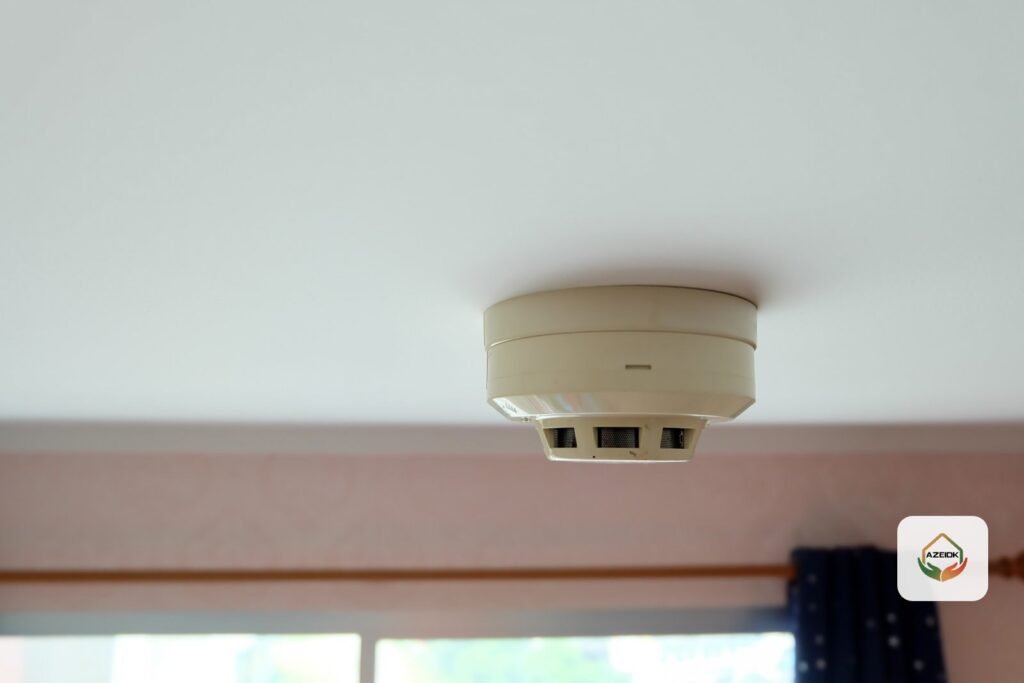
- Wirelessly interlinked domestic alarms: standalone mains or battery smoke or heat alarms linked by radio so that when one sounds, all sound. They suit homes, apartments and small premises.
- Commercial wireless fire alarm systems: devices listed for fire alarm use under EN 54-25 or NFPA 72, connected to a control panel that supervises each device, shows alarm and fault locations and drives interfaces with other systems.
On its Saudi pages, under the Context Plus brand, AZEIDK lists RadioLINK+ plug-in wireless modules Ei600MRF and Ei200MRF, fitted to the back of compatible domestic alarms to interlink them, and the RadioLINK alarm base Ei168RC, which adds a radio link to mains-powered Ei140RC series alarms. The product pages state that a system takes up to 12 devices, uses house coding to prevent interference from neighbouring systems, and that modules relay signals between devices. They also state that these devices are not designed as a core component of a BS 5839-1 system and are not essential to evacuation or life-safety procedures.
They are a good way to interlink alarms in a villa or apartment without running cable between rooms, but not a substitute for a commercial system where the code requires a panel-based fire alarm. Our guide on choosing between a battery smoke alarm or a panel fire alarm system explains when a standalone alarm is enough and when you need a full system, including RadioLINK rules.
Is upgrading the existing wired system a better option?
In many existing buildings the better answer is to upgrade the wired system, reusing existing cable routes when replacing the panel and devices, with wireless devices only at a few points. Upgrading an Old Fire Alarm System explains when to replace conventional with addressable and how to define the scope.
How AZEIDK can help
The wired, wireless or hybrid decision starts with a building survey. AZEIDK’s assessment of existing systems and scope definition service reviews the current system and available cable routes and proposes a suitable solution within the fire alarm systems AZEIDK designs, supplies, installs, programs and tests.
FAQ
Are wireless fire alarm systems accepted in Saudi Arabia?
It depends on the standard adopted by the design, the specific model’s listing for the purpose, and acceptance by the consultant and authority having jurisdiction. Put the solution to them before supply.
How long do wireless device batteries last?
The manufacturer states it for each model. EN 54-25 requires at least 36 months of normal operation, and the NFPA 72 editions we reviewed require at least one year for a primary battery.
Are RadioLINK devices suitable for a commercial building?
The product pages state they are for homes, apartments and small premises and not designed as a core component of a BS 5839-1 system. Commercial buildings need a panel-based system as the code requires.
Can wireless devices be added to an existing wired system?
In some systems, yes, through a module or receiver compatible with that panel. Check compatibility in the datasheet and installation manual.
Summary
A wireless fire alarm system is a practical option for existing buildings where cabling is costly or disruptive, provided it is listed for the purpose, preceded by a wireless survey and supported by a maintenance programme covering batteries and signal supervision. In new construction or where routes are available, a wired system usually remains simpler.
Need a fire alarm system in an existing building without major cabling works? Send us a description of the building and its current system, and the AZEIDK team will propose a suitable solution after a site survey. Contact the AZEIDK team