


Qatar Civil Defence Requirements 2026: Third Edition of the Technical Requirements Guide and What It Means for Saudi Projects
- News
- 7 min read
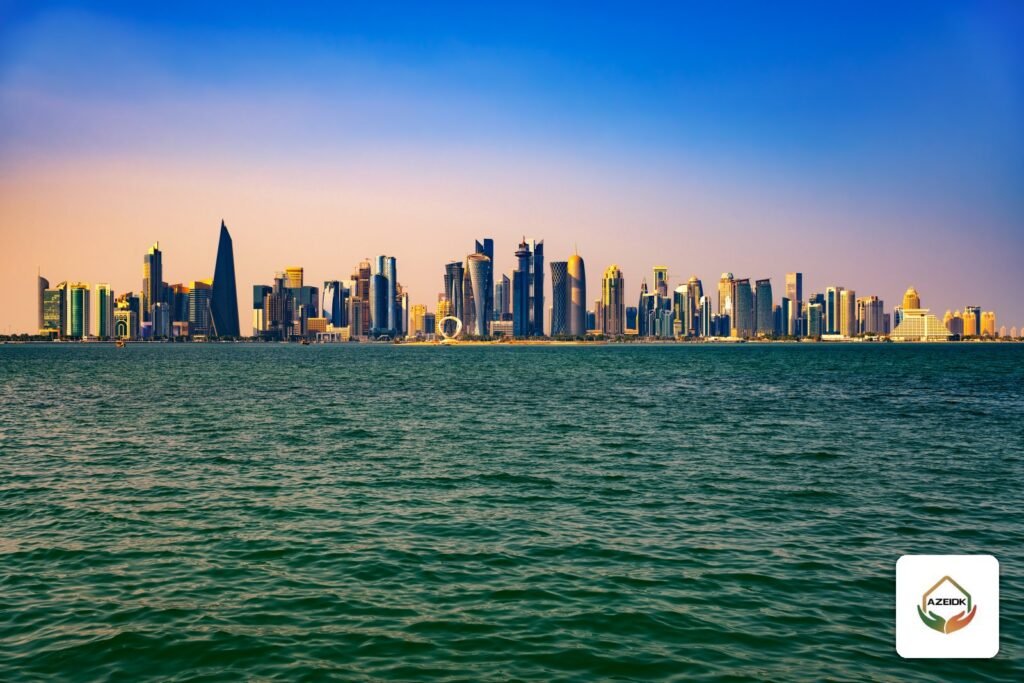
On 21 October 2026, Qatar’s Ministry of Interior presented updates to the Qatar Civil Defence requirements in the third edition of the Civil Defence Technical Requirements Guide, on the second day of Milipol Qatar 2026, according to Qatar News Agency (QNA). First Lieutenant Engineer Hessa Ahmed Al Jassim of the General Directorate of Civil Defence presented the changes. The headline item: automatic sprinklers are now required in medium-risk warehouses and factories with a total area above 1,115 m².
Fire Middle East reported the story on 27 October 2026. Below we set out what was actually announced, place it next to Abu Dhabi’s March 2026 amendments as background, and explain what it means for owners, contractors and consultants in Saudi Arabia, where SBC 801 remains the governing fire code.
Key takeaways
- The third edition of Qatar’s Civil Defence Technical Requirements Guide was presented at Milipol Qatar 2026 on 21 October 2026.
- Automatic sprinklers are required in medium-risk warehouses and factories whose total area exceeds 1,115 m², counting all spaces under a single roof.
- New provisions cover single-staircase buildings (residential, hotels, labour accommodation, offices) and basement levels.
- Adjacent buildings can be treated as separate under conditions, including a two-hour fire-rated partition wall with no openings.
- Saudi requirements do not change, as SBC 801 governs in the Kingdom, but Saudi suppliers and contractors working in Qatar need to recheck sprinkler scope before pricing, and Abu Dhabi relaxations should not be carried into Saudi projects.
What changed in Qatar Civil Defence requirements?
According to QNA, the updates are meant to help consulting firms meet fire prevention and safety requirements. They were presented at a seminar on civil defence and national preparedness for emergencies and crisis management. The announced points:
- Sprinklers: revised requirements for sprinkler systems in industrial facilities and warehouses, with a 1,115 m² trigger for medium-risk warehouses and factories. All spaces under one roof count towards the total.
- Single staircase: provisions for single-staircase design in residential buildings, hotels, labour accommodation and offices; staircase requirements also extend to military housing.
- Basements: more design flexibility while keeping fire-resistant separation and protective doors.
- Adjacent buildings: may be treated as separate structures when conditions are met, such as a two-hour fire-rated partition wall with no openings, with construction materials and roof independence also considered.
- Modifications to approved buildings: assessed case by case, based on the nature of the change and its effect on fire safety, under the technical specifications adopted by the General Directorate of Civil Defence.
Al Raya, carrying the QNA report in Arabic, adds that the updates revise how building height is calculated: under specific controls, some floors housing guard rooms or service rooms may be excluded from the height calculation. It also reports that paint rooms in carpentry workshops require sprinkler systems regardless of their area. The published reports do not give the detailed controls or the full conditions for single-staircase designs.
Background: Abu Dhabi’s March 2026 amendments
On 12 March 2026, the Abu Dhabi Civil Defence Authority released 54 amendments to the UAE Fire and Life Safety Code of Practice (2018 edition), as reported by Fire Middle East. Examples: phone jack systems are required only in buildings taller than 90 m; private hydrant systems are not required at industrial sites where public hydrants are within 100 m; and mandatory balcony sprinklers in residential and mixed-use developments were removed. Qatar’s update follows the same direction: turning practices that used to be decided case by case into written rules.
What does this mean for the Saudi market?
These updates do not change requirements inside the Kingdom. The reference is the Saudi Fire Protection Code SBC 801 together with Civil Defense approval. They do matter to three groups in the Saudi market: Saudi suppliers and contractors pricing or delivering projects in Qatar or Abu Dhabi, owners running warehouses or factories in more than one GCC country, and consultants who carry solutions from Gulf projects into Saudi ones.
One detail is worth noting. Qatar’s 1,115 m² equals 12,000 ft², the same value the International Building Code (sections 903.2.4 and 903.2.9) uses to require sprinklers in a Group F-1 factory or Group S-1 storage fire area. Two other triggers apply: combined fire areas of that group exceeding 24,000 ft², or a fire area located more than three stories above grade plane. This is based on the text of section 903.2.9 as reproduced in an International Code Council (ICC) interpretation and on MeyerFire’s summary of the 2018 to 2024 editions. The difference is in how area is measured: the model code uses the fire area bounded by fire walls and barriers, while the Qatari announcement counts all spaces under one roof. SBC 801 follows the arrangement of the International Fire Code, but its values must be read from the adopted Saudi text, not the US model edition.
For Saudi warehouses and factories, occupancy classification, hazard level and storage height remain the first inputs before choosing a system; see our article on fire protection for warehouses and logistics facilities. Saudi rules for worker housing are covered in worker accommodation safety requirements.
What this means for buyers and facilities in Saudi Arabia
- If you supply or build in Qatar: work out sprinkler scope for medium-risk warehouses and factories on the total area under one roof before pricing, since this can change sprinkler and pipe quantities and the fire pump and tank size, and obtain the official third-edition text before closing the offer.
- Do not carry Abu Dhabi relaxations into a Saudi project: removing balcony sprinklers, dropping clean agent protection in panel-only electrical rooms or omitting a private hydrant network are decisions under the UAE code. Any similar decision in Saudi Arabia rests on the SBC 801 text and Civil Defense approval, not on an earlier Gulf project.
- For warehouse and factory owners in the Kingdom: after any extension or link to an adjacent building, review occupancy classification and hazard level again, because a change in area can change the required system.
- For consultants and contractors: keep a separate file per country (calculations, approved material lists and authority requirements) so a Saudi drawing is not delayed by a value taken from another code.
AZEIDK Expert Take
If you own a warehouse or factory in Qatar, check its total area under one roof before treating any part of it as outside sprinkler scope, and obtain the official third-edition text from Qatar Civil Defence rather than relying on press summaries. In Saudi Arabia, start from the SBC 801 occupancy classification and the approved consultant’s calculations, then select listed or approved sprinklers suited to the hazard, such as Tyco Series TY-B sprinklers in upright and pendent versions. For network design, supply and installation, see fire fighting systems.
Reviewing sprinkler scope for a warehouse or factory in Saudi Arabia? Send the layout and storage type, and the AZEIDK team will review system scope, approved materials and Civil Defense approval with you. Contact AZEIDK
Sources
- MOI Showcases Updates to Civil Defense Technical Requirements Guide at Milipol Qatar 2026, Qatar News Agency (QNA), 21 October 2026
- Ministry of Interior presents updates to the Civil Defence Technical Requirements Guide at Milipol Qatar 2026 (Arabic), Al Raya (QNA), 21 October 2026
- Qatar updates fire safety requirements for some buildings, Fire Middle East, 27 October 2026
- Abu Dhabi updates fire safety code with new amendments aimed at flexibility and sustainability, Fire Middle East, 6 April 2026
- IFC Interpretation 20-14, Section 903.2.9, International Code Council (ICC), 6 October 2014
- Sprinklers: Where Required in the IBC, MeyerFire, 2025
See the AZEIDK Salamah certificate and Civil Defense licence service.
Related guides
- SEVEN Al Khobar Entertainment Complex: Hassan Allam’s Kortech Wins MEP Works Contract Including Fire Protection
- Interior Minister Launches HCIS Marqab Platform and Operations Center: What Industrial Facilities Should Note
- Giga-Project Fire Safety: Shifting Priorities Under Vision 2030
- Fire Middle East Conference in Riyadh Postponed to 1 June 2027: New Date and Fire Safety Themes for Airports and Data Centres

