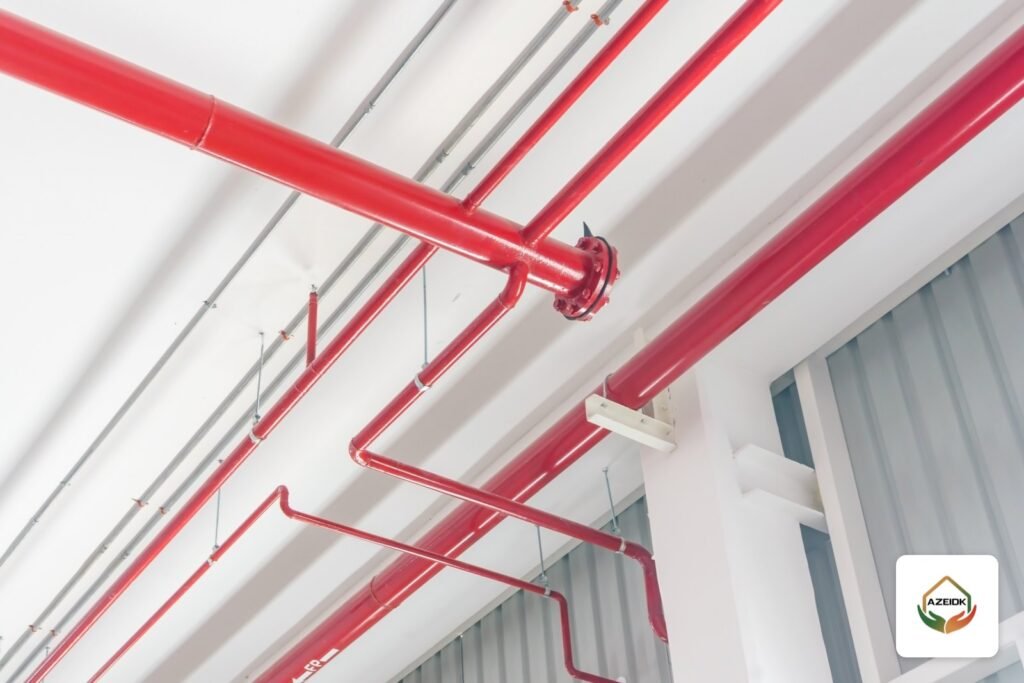
Fire pipe price in Saudi Arabia is set by wall thickness (Schedule 10 or Schedule 40), the manufacturing standard, UL or FM approval, black or galvanized finish, and end preparation (grooved, threaded or bevelled for welding), then by diameter and quantity. The fittings, joining method and installation complete the picture. So compare fire fighting pipe quotes on the same standard, schedule, approval and end type, not on the price per metre alone. This article explains each factor, using the KDI UL Listed and FM Approved pipes supplied by AZEIDK as examples.
Key takeaways
- Schedule 40 has a thicker wall than Schedule 10 at the same size, which changes weight, price and the joining methods allowed.
- KDI pipe, for example, is Schedule 10 to ASTM A795 and Schedule 40 to ASTM A53, according to the product page.
- UL (UL 852) or FM (Class 1630) approval covers specific sizes, so check that your sizes fall inside the range.
- The real network cost is pipe plus fittings, hangers, installation and testing, not pipe alone.
- Two quotes are comparable only when standard, schedule, approval, finish, end type and pricing unit match.
What drives the fire pipe price?
Pipe is the largest item by volume in a sprinkler and hose cabinet network, and a small difference per metre multiplies over thousands of metres. That is why it pays to know where the gap between two quotes comes from.
1. Wall thickness: Schedule 10 or Schedule 40
The schedule number describes the pipe wall thickness. At the same size, Schedule 40 has a thicker wall than Schedule 10, so each metre weighs more and uses more steel. Thickness is not a free choice, though, because it is tied to the joining method. Based on published summaries of NFPA 13 requirements, steel pipe that is threaded or cut-grooved needs Schedule 40 up to 6 inch and Schedule 30 at 8 inch and larger, unless the pipe is specially listed for it. Schedule 10 is usually joined by roll grooving or welding. Always check the NFPA 13 edition adopted for the project and the consultant’s specification.
2. Manufacturing standard
Steel fire pipe is made to recognised ASTM standards. According to the KDI product page on the AZEIDK website, Schedule 10 pipe is made to ASTM A795 (Grade A or B) and Schedule 40 to ASTM A53 (Grade A or B). Pipe with no clear standard on the datasheet may be cheaper, but it is usually not accepted in the submittal.
3. UL and FM approval, and its scope
Pipe listed by UL or approved by FM has been tested by an independent body. The KDI page cites UL 852, the standard for metallic sprinkler pipe, and FM Approvals Class 1630. What matters is that approval covers specific sizes: for KDI, the UL listing covers Schedule 10 from 3/4 to 6 inch and Schedule 40 from 1/2 to 6 inch. Ask the quote to state approval per size. For background on both marks, see sprinkler valve and grooved fitting brands in Saudi Arabia.
4. Black or galvanized
Hot-dip galvanized pipe costs more than black pipe because of the zinc layer. The KDI page notes that galvanized pipe can be used in dry systems within the stated FM approval range. Choose the finish for the system type and the specification, not on price alone.
5. End preparation
Pipe can come grooved, threaded, bevelled for welding, or plain end. Factory preparation has a cost; site preparation has a labour and equipment cost. State the end type in the request so you do not compare ready pipe with pipe that still needs work.
6. Diameter, quantity and pipe length
Price rises with diameter, and larger quantities leave room to negotiate. Ask for the length of each pipe and the pricing unit (per metre, per length or per tonne), because different units make a direct comparison wrong.
7. Fittings and joining method
Pipe is only part of the cost. The network also needs elbows, tees, reducers, couplings or flanges. Grooved networks use fittings such as Luyuan ductile iron grooved fittings and couplings; threaded networks add threaded fittings and threading labour; welded networks add qualified welders and weld inspection.
Schedule 10 vs Schedule 40 fire fighting pipe
| Item | Schedule 10 | Schedule 40 |
|---|---|---|
| Wall thickness | Thinner | Thicker at the same size |
| Standard for KDI pipe | ASTM A795 (Grade A or B) | ASTM A53 (Grade A or B) |
| KDI UL listing range | 3/4 to 6 inch | 1/2 to 6 inch |
| Usual joining | Roll groove or welding | Threaded, cut groove, roll groove or welding |
| Cost effect | Lower weight per metre | Higher weight per metre, allows threading |
Note: this table is a general comparison. The final decision comes from the approved drawings and the NFPA 13 edition adopted for the project.
Grooved or threaded: how to work out the full cost
Many buyers compare pipe price only and are then surprised by the total. The correct calculation adds up, for each method:
- Grooved: pipe of the right schedule, grooving (in the factory or with a site machine), couplings, grooved fittings and gaskets.
- Threaded: Schedule 40 pipe in small sizes, threading labour, threaded fittings and thread sealant.
- Welded: qualified welders, end preparation, weld inspection and hot-work fire precautions.
Each method has its place depending on size and project type, and none is cheapest in every case. For site steps see fire fighting system installation in Saudi Arabia.
How to compare fire pipe quotations
- Brand and standard: manufacturer name, ASTM standard and grade.
- Schedule and size: schedule for each size, as in the BOQ.
- Approval: UL, FM or both, the sizes covered, and evidence.
- Finish: black or galvanized, and for which part of the network.
- Ends: grooved, threaded, bevelled or plain.
- Pricing unit and pipe length: metre, length or tonne.
- Documents: datasheet, mill test certificate, certificate of origin and submittal file.
- Scope: supply only, or supply and installation with hangers and hydrostatic testing.
On SASO requirements, ask the supplier whether the product falls under a technical regulation that needs a certificate of conformity through the SABER platform, and request it where it applies. For comparing full system offers, see how to compare fire system quotations.
Mistakes that raise fire pipe costs later
- Threading Schedule 10 pipe that is not listed for threading, then replacing it after a consultant comment.
- Buying sizes outside the approval range on the datasheet.
- Storing pipe directly on the ground without end caps, so dust gets in and the inside rusts before installation.
- Skipping flushing and testing before handover, then finding a leak after ceilings are closed. See hydrostatic pressure testing.
- Relying on price per metre without adding fittings, hangers and labour.
KDI pipe and Luyuan fittings from AZEIDK
AZEIDK supplies KDI fire fighting pipe in Saudi Arabia through its technical supply service. According to the product page:
- Schedule 10 to ASTM A795 and Schedule 40 to ASTM A53, black or hot-dip galvanized.
- UL Listed to UL 852 and FM Approved to Class 1630.
- Ends for grooved, threaded or welded (bevelled) joints, depending on pipe type and approval range.
- ERW (electric resistance welded) manufacture, with hydrostatic testing in production and ultrasonic inspection of the weld seam.
Alongside it, Luyuan ductile iron grooved fittings: rigid and flexible couplings, elbows, tees, reducers and flange adaptors. The manufacturer’s catalogue states that most products are UL listed or FM approved, so check approval per model and size before ordering. For a correct BOQ and pipe sizing, see our engineering design and calculations service or the fire fighting systems page.
Frequently asked questions
What is the fire pipe price in Saudi Arabia?
There is no fixed price. It varies with schedule, standard, approval, finish, end type, diameter and quantity. Send your BOQ for an accurate quote.
How does Schedule 40 pipe price compare with Schedule 10?
Schedule 40 has a thicker wall at the same size, so it weighs more and is priced differently. More importantly, the joining method sets the schedule you may use, so do not choose on price alone.
Is UL and FM approved fire fighting pipe more expensive?
Approval adds testing and follow-up cost at the factory, but it gives you a document the consultant accepts. Always compare approved pipe with approved pipe.
Can Schedule 10 pipe be threaded?
Based on summaries of NFPA 13 requirements, threaded pipe up to 6 inch needs Schedule 40 unless the pipe is specially listed for threading. Check the datasheet and project specification.
When should galvanized pipe be used?
It depends on the system type and project specification. The KDI page states that galvanized pipe can be used in dry systems within the FM approval range.
Should pipe and fittings come from the same supplier?
Not necessarily, but it makes it easier to confirm that grooves, fittings and approvals match, and it keeps the submittal file clear.
Conclusion
The fire pipe price comes from standard, schedule, approval, finish, ends and diameter, then from fittings, joining method and installation. Define these items in the BOQ first, request quotes on the same basis, and make sure the documents are enough for material approval and for Civil Defense approval.
Need a price for fire network pipe and fittings? Send your BOQ and sizes and we will review them with you. Talk to the AZEIDK team