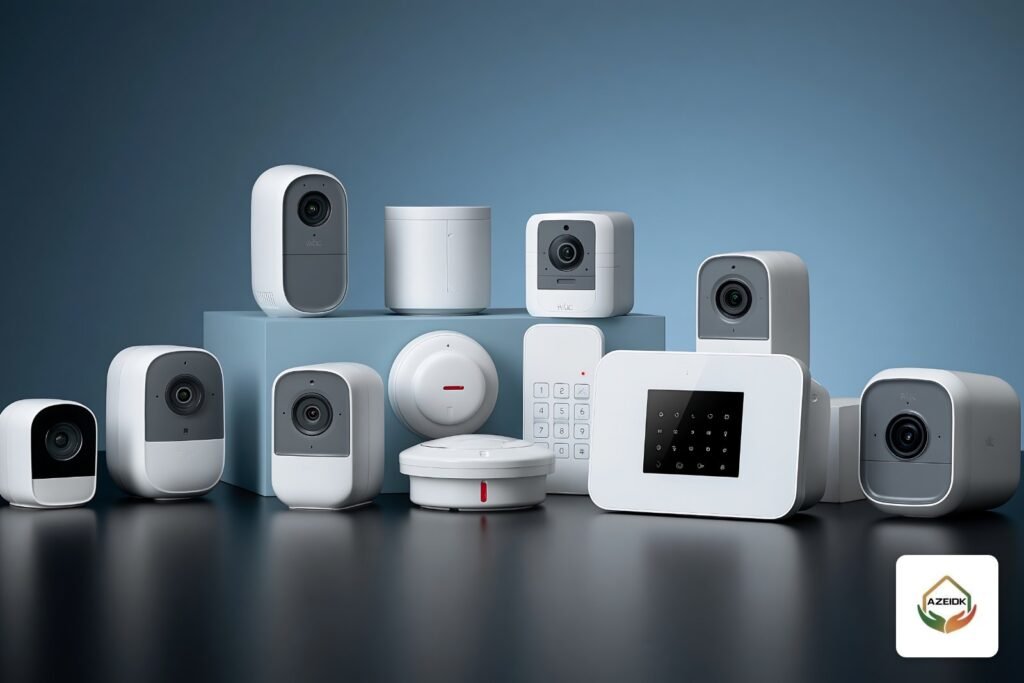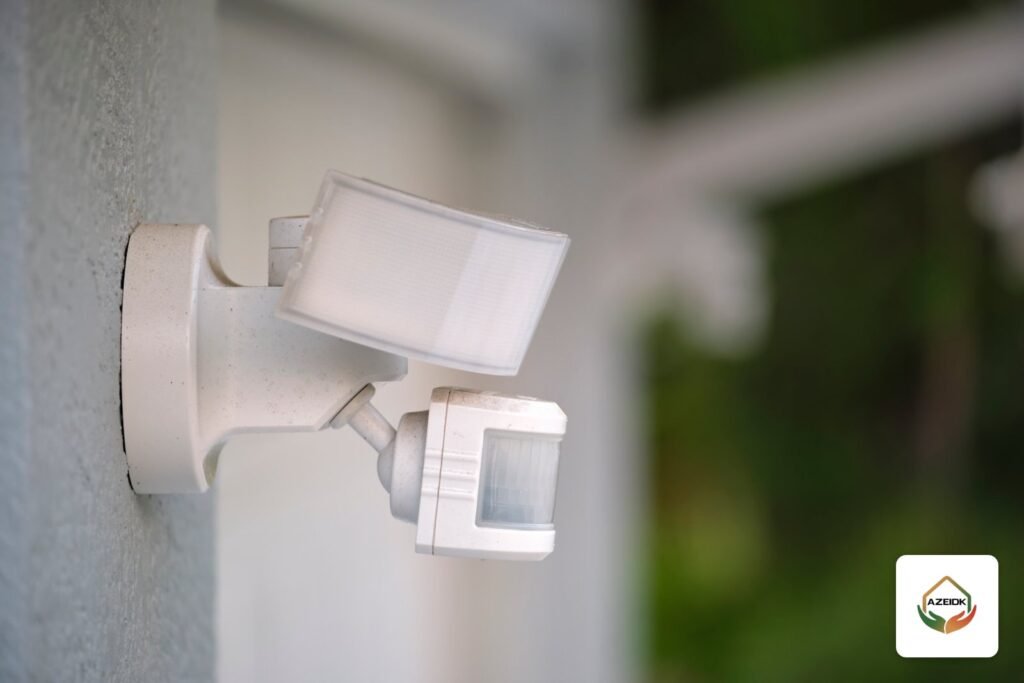
An outdoor motion detector is the part of a burglar alarm system mounted outside the building to detect anyone entering the yard, approaching a villa wall or a warehouse gate, before they reach the doors and windows. It differs from an indoor detector in its housing, its weather resistance and the way it processes the signal, because the outdoors is full of false alarm sources: sun, hot air, moving branches and cats. This article explains how to choose an outdoor motion detector and where to install it, using the Paradox PMD85M outdoor detector supplied by AZEIDK as an example, and how to tie it in with cameras as part of security and surveillance systems.
Key takeaways
- An outdoor motion detector gives early warning before a person reaches the building. It complements door contacts and indoor detectors and does not replace them.
- Indoor detectors are not for outdoor use. For example, the Ajax Superior MotionProtect is designed for indoor use with an IP50 rating.
- The Paradox PMD85M is an outdoor dual-optic PIR detector covering 90 degrees over 11 m x 11 m, and it works wirelessly with Paradox panels.
- The manufacturer gives the PMD85M an operating range of -20 to 40 °C, so a shaded location matters in a Saudi summer.
- The most common outdoor false alarm sources are direct sun, moving trees, air conditioner exhausts and animals.
In this article
- How does an outdoor motion detector differ from an indoor one?
- The Paradox PMD85M outdoor detector: what does it offer?
- Outdoor motion detectors in Saudi heat
- Where should outdoor motion detectors go in a villa, warehouse or shop?
- Outdoor detector false alarms and how to avoid them
- Linking outdoor motion detectors with cameras
- Frequently asked questions
- Conclusion
How does an outdoor motion detector differ from an indoor one?
Most intruder alarm motion detectors use passive infrared (PIR): they pick up the change in heat from a body moving in front of the lens. Inside a building, the temperature is fairly stable and there are no branches or direct sun. Outside, everything changes through the day, so an outdoor detector needs three things an indoor one does not need to the same degree:
- A housing built for outdoors: resistant to impact, heat, dust and rain.
- Smarter signal processing: two or more optical elements, so an alarm is raised only when the elements confirm the same movement.
- Adjustable settings: sensitivity, detection energy level and interchangeable lenses to shape the detection zone to the site.
That is why an indoor detector should not be mounted under a canopy in the yard. For example, the Ajax Superior MotionProtect Jeweller page describes it as an indoor detector, rated IP50, with a temperature range of -10 to +40 °C. It is a very good detector inside the building, but it is not for outdoor use.
The Paradox PMD85M outdoor detector: what does it offer?
The key data below come from AZEIDK’s product page and the manufacturer’s page:
| Item | Paradox PMD85M |
|---|---|
| Technology | Outdoor dual-optic PIR detector |
| Coverage | 90 degrees, 11 m x 11 m |
| Detection speed | 0.2 to 3.5 m/s |
| Pet immunity | Yes |
| Operating temperature | -20 to 40 °C |
| Communication | Two-way GFSK wireless with Paradox panels, 868 or 914 MHz depending on region |
| Battery | 3 x AA lithium, 6+ years with normal use according to the manufacturer |
| Settings | Adjustable sensitivity and detection energy level, interchangeable lenses, built-in temperature sensor |
| Stated standards | EN 50131-2-2 Grade 2, environmental Class IVA, according to the manufacturer’s page |
The detector works wirelessly with Paradox controllers such as the Paradox X45 / X46 hybrid controller and the Paradox M25 console. Where the detector is far from the panel or behind concrete walls, add the Paradox RPT5M wireless repeater. To alert people outside, the Paradox SR40M-SL solar siren can be installed indoors or outdoors.
Outdoor motion detectors in Saudi heat
A point many people miss: the PMD85M’s stated operating range tops out at 40 °C, while summer temperatures in many Saudi cities go above that, and a sunlit wall surface is hotter than the air. So:
- Choose a shaded wall where possible, or a spot under a canopy or overhang, and never point the detector into direct sun.
- Remember that a PIR detector relies on the temperature difference between a body and its background. When floors and walls approach human body temperature, that difference shrinks, so do not rely on the outdoor detector alone to protect the perimeter in summer.
- Check the official installation manual for mounting height and tilt, since the product page does not give a specific height.
Where should outdoor motion detectors go in a villa, warehouse or shop?
Villas
Typical locations are the back yard, the side passage between the building and the boundary wall, and the roof access if it can be reached from a neighbouring building. Aim the detector so the expected movement crosses in front of the lens, because PIR detectors pick up movement across their field better than movement straight towards them.
Warehouses and loading yards
Focus on rear gates, loading doors and the passages around the warehouse, and keep away from truck and forklift routes during working hours. In large open yards, cameras with video analytics are often a better fit than detectors, as explained in the article on AI CCTV cameras.
Shops and showrooms
A street-facing frontage is not a good place for an outdoor detector because of passers-by. It is better to protect the rear door, the service passage and the store room entrance.
Outdoor detector false alarms and how to avoid them
| Cause | What happens | Fix |
|---|---|---|
| Direct sun and reflections | Rapid change in background temperature | A shaded wall, aimed away from exposed east and west views |
| Trees and shrubs | Warm branches moving in the wind | Trim planting in front of the detector, or change the angle and lens |
| AC and generator exhausts | Intermittent hot air currents | Move the detector out of the airflow |
| Cats and birds | A small warm body moving | Enable pet immunity and adjust sensitivity, and avoid surfaces close to the lens where animals can stand |
| Low battery or weak radio signal | Supervision faults and loss of communication messages | Monitor battery status from the panel and add a repeater where needed |
Before handover, run the system in test mode for several days, review the event log in the panel or app, and then fine-tune the sensitivity. This step prevents most complaints after handover.
Linking outdoor motion detectors with cameras
The detector tells you there is movement, and the camera tells you what it is. A perimeter is usually designed in two layers: outdoor detectors in hidden areas and narrow passages, and outdoor cameras covering yards and gates. Depending on the panel and cameras chosen, the system can be set to push a snapshot or clip from the nearest camera to the app when a detector triggers. Camera options are in the CCTV cameras and recorders category, and installation steps in the CCTV installation guide.
AZEIDK’s service covers selecting the detectors and panel, laying them out on the drawing, installation, programming and testing. For the other products from these brands, see the Paradox and Ajax brand pages.
Frequently asked questions
What is the best outdoor motion detector for a villa?
Choose a detector designed for outdoor use with two or more optical elements, pet immunity and adjustable sensitivity, compatible with your alarm panel. AZEIDK supplies the Paradox PMD85M for systems built on Paradox panels.
Can I install an indoor motion detector outside under a canopy?
It is not recommended. Indoor detectors are not built for dust, heat and a changing background, and will give false alarms or fail. Use a detector rated for outdoor use.
Why does my outdoor motion detector trigger when nobody is there?
Usually direct sun, moving branches, hot air from an AC unit or small animals. Move the detector or change its angle, adjust the sensitivity and enable pet immunity.
Do outdoor motion detectors work in summer heat?
They work within the manufacturer’s stated temperature range, which for the PMD85M is up to 40 °C. Choose a shaded location and do not rely on the detector alone for the perimeter. Combine it with cameras.
How long does a wireless outdoor detector battery last?
Paradox states that the PMD85M batteries (3 x AA lithium) last more than 6 years with normal use. Actual life depends on how often the detector transmits and on signal conditions.
Do I still need cameras if I install outdoor detectors?
The detector raises the alarm, and the camera shows and records what caused it. For most villas and warehouses, combining the two works better than relying on either one.
Conclusion
An outdoor motion detector buys you time before anyone reaches the door, provided it is built for outdoor use and installed in the right place. Choose a dual-optic detector with pet immunity, put it in a shaded spot away from trees and air exhausts, test it for a few days before handover, and combine it with cameras to cover the perimeter. AZEIDK can design, supply and install the system for villas, warehouses and shops.
Need to protect a yard, boundary wall or warehouse yard? Send us a site plan or photos and the type of alarm panel you have, if any, and our team will propose a layout of detectors and cameras. Talk to the AZEIDK team
To request a fire alarm system for your facility, see AZEIDK fire alarm systems.
Related guides
- Prequalification Fire Contractor File: What Owners and Main Contractors Ask For
- Civil Defense Fire Safety Approval in Saudi Arabia: Step by Step
- Addressable Fire Alarm System: How It Works, vs Conventional, and What to Compare Between Manufacturers
- AFFF Foam Concentrate in Saudi Arabia: Choosing the Brand and the 1%, 3% or 6% Rate