On a project combining fire fighting, fire alarm, electrical and HVAC works, contract structure shapes much of the outcome before installation starts. When one firm holds the MEP contracting scope with its supporting general works, it owns every package boundary, the interfaces between them and the approval file through to handover. We deliver this under AZEIDK MEP works and general contracting.
This article takes the owner’s and procurement view: contract packages, interface responsibility, submittals, sequencing and where Civil Defense steps fit as a service. Ceiling and shaft coordination and the cause-and-effect matrix are in our MEP, fire safety and low-current integration guide.
Key takeaways
- A single contract does not remove trade interfaces; it moves responsibility for them to one accountable party.
- Write the scope as packages, each with deliverables and documents to approve.
- Use a matrix stating who supplies, installs, connects and tests at each interface.
- Ask for a submittal schedule tied to procurement, not just a document list.
- Civil Defense approval support means preparing and following up the file; no contractor can guarantee approval.
In this article
- Why contract structure matters in MEP contracting for fire projects
- Work packages in a single contract
- Interfaces between trades: who is contractually responsible?
- Submittals and document control during execution
- Sequencing on a single project
- Civil Defense approvals as part of the service scope
- Handover and beyond
- Writing the scope in a request for proposal
- Common mistakes in MEP contracts for fire projects
- How AZEIDK can help
- Frequently asked questions
- Conclusion
Why contract structure matters in MEP contracting for fire projects
Life safety systems do not work in isolation. A fire pump needs power, a plinth and a drained room; the alarm panel takes valve supervisory signals and commands HVAC and smoke extraction fans. Split across contracts, these works leave gaps: an item nobody priced, a cable nobody owns, a test waiting on another party.
Owners usually choose between two models:
| Item | One contractor for MEP and general works | Separate trade packages |
|---|---|---|
| Interface responsibility | Held by one party within the contract | Split, needing a coordinator on the owner’s or consultant’s side |
| Contracts and correspondence | One contract, one point of contact | Several contracts and overlapping programmes |
| Price competition | Less granular per trade | Higher, as specialists price each package |
| Approval and handover file | One integrated file | Several files a third party assembles |
| Often suits | Mid-sized commercial and industrial buildings, refurbishment and extensions | Large projects where the owner has a strong technical team |
The choice depends on project size, the owner’s capability and the programme.
Work packages in a single contract
Write the scope by package, each with content and a measurable deliverable at acceptance:
| Package | Typical content | Deliverable at acceptance |
|---|---|---|
| Supporting general works | Equipment plinths, pump room and system room fit-out, openings, finishes, access doors | Rooms ready for equipment, with civil works acceptance records |
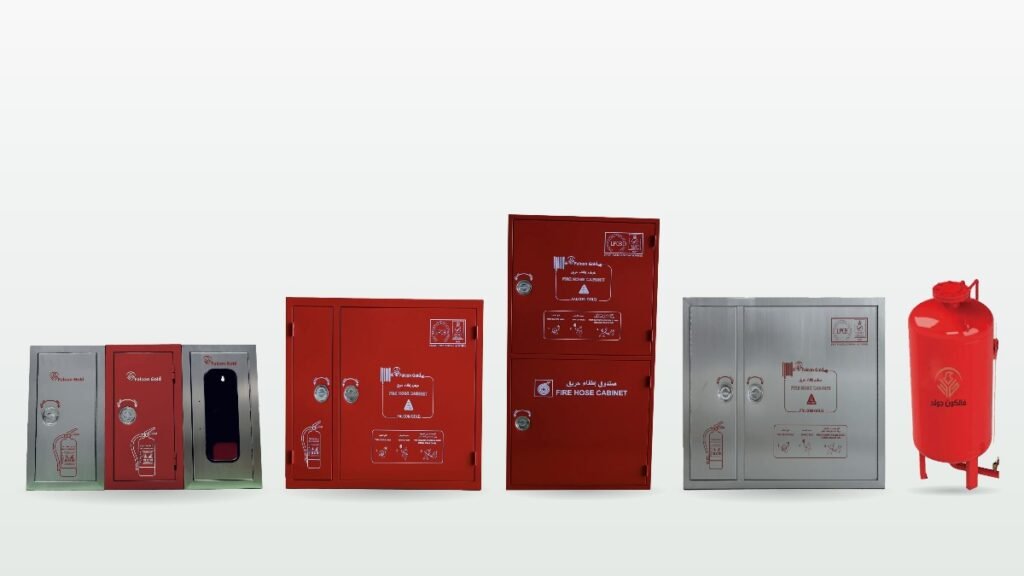
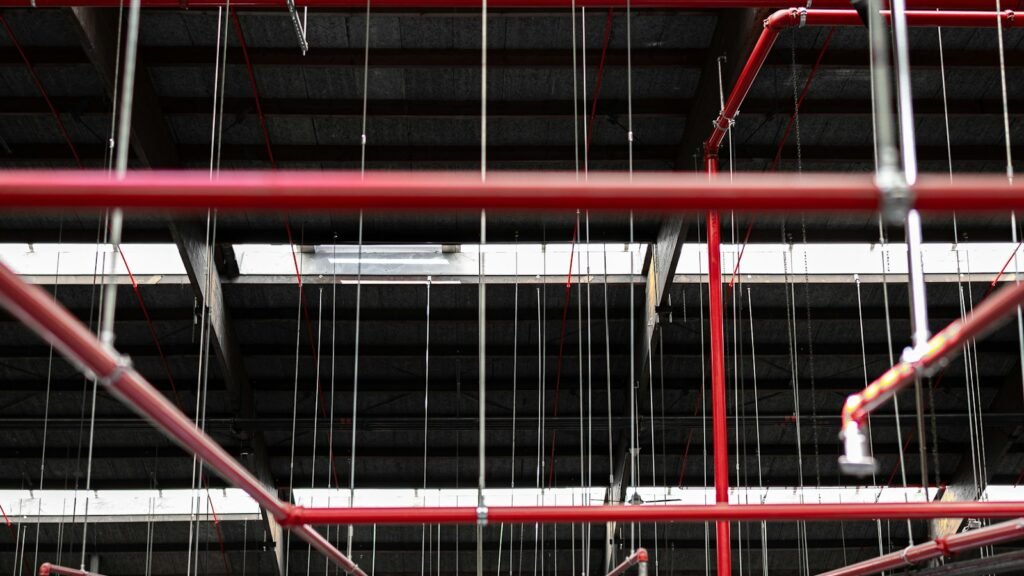
| Fire fighting network | Pipes and fittings, sprinklers, hose cabinets, valves, pump set | Pressure-tested network with test records |
| Fire alarm and low current | Panels, detectors, notification devices, cabling, programming | Programmed system with zone schedules and device test results |
| Power to life safety systems | Supplies to pump, alarm and smoke extraction panels, earthing | Tested circuits and updated distribution drawings |
| HVAC and smoke extraction | Fans, ductwork and control points linked to the alarm | Proven emergency operating modes |
| Plumbing and drainage | Pump room drainage, drain lines and test points | Tested, unobstructed drain lines |
Not every project needs every package; a refurbishment may only involve network changes, added alarm devices and a new power feed. Name what is in and out of scope instead of writing “everything required”.
Interfaces between trades: who is contractually responsible?
Under a single contract, interfaces become the contractor’s internal matter, but the owner should still see them in writing: interface failures surface at testing, not installation. A responsibility matrix answers, per interface: who supplies, installs, connects or programs, and tests and signs off.
Interfaces that deserve their own line:
- Power to the fire pump controller, and the termination boundary between the electrical and fire packages.
- Valve supervisory and flow switches: supplied with the network, wired and programmed with the alarm.
- HVAC shutdown and smoke fan start commands: who installs the control modules and who programs them.
- Pump room drainage and alarm valve station drain lines.
- Civil works for equipment bases and openings before services run.
Their technical side, such as sprinklers under obstructions and interlock logic, is in the integration guide above.
Submittals and document control during execution
Two main document streams go to the consultant: material submittals (the datasheet and certificate package for each item before purchase), then shop drawings and calculations for each system. Add method statements for major activities, RFIs where drawings conflict with the site, and inspection requests (IRs) before work is covered.
The owner should ask for:
- One submittal register across all trades showing each document’s status: submitted, approved, approved with comments, rejected.
- A submission programme leaving time for review and resubmission before purchase dates, especially for long-lead pump sets and panels.
- No change to an approved item without an alternative submittal through the same route.
- A final copy of each approved document for the handover file.
Sequencing on a single project
Order varies, but a typical sequence is:
- Survey and scope: site visit, drawing review and agreement on packages.
- Design and building permit: for new buildings, a licensed design office prepares the designs on the Balady platform and sends the request to a technical inspection company, which checks compliance with the Saudi Building Code. The design office then assigns the supervising office and the building contractor through the platform, and each accepts the assignment.
- Shop drawings and submittals: submitted to the agreed schedule.
- Procurement: purchase after approval, checking deliveries against the submittal.
- Civil works and first fix: rooms and plinths prepared, then pipework, containment and cabling installed.
- Inspection before close-up: inspection requests for concealed work before ceilings and walls close.
- Individual tests: network pressure tests, circuit tests, alarm programming and device tests.
- Integrated testing: confirming the sequence between systems works as designed; NFPA 4 provides a framework where the designer or authority adopts it.
- Handover, occupancy certificate and Civil Defense licence: covered in the next two sections.
Civil Defense approvals as part of the service scope
The binding framework is the Saudi Fire Protection Code, SBC 801, part of the Saudi Building Code, whose application the General Directorate of Civil Defense follows up. Civil Defense facility licences are issued and renewed on the Salamah platform. According to Elm’s overview of the platform, Salamah separates direct, low-to-medium-risk activities, which Civil Defense licenses directly once a safety equipment invoice from a Salamah-approved safety company or a technical report from an approved engineering office is issued (depending on the activity), from indirect, high-risk activities, which require a contract with a safety company and maintenance contracts before Civil Defense starts its inspection and issues the licence. Check current requirements on the platform.
Write approval support as defined deliverables, not a guaranteed result:
- Reviewing the activity’s requirements and documents.
- Preparing drawings, technical reports and test records.
- Logging comments and assigning who resolves each.
- Organising submission and follow-up until comments close.
Only the competent authorities issue approvals, so AZEIDK provides Civil Defense approval support without guaranteeing the outcome. For indirect activities, check that the installing or maintaining company is itself approved on Salamah. The full path to the licence is in our step-by-step Civil Defense approval guide.
Handover and beyond
A single contract pays off most at handover: one file holding as-built drawings for every trade, test records, approved submittals and O&M manuals. Its contents are covered in our article on fire systems handover documents.
For non-residential buildings, the occupancy certificate application on Balady requires a contract with an engineering office, which completes the data and prepares the report before the municipality approves the certificate. The contract should oblige the contractor to deliver the documents that office needs, and define trial operation, operator training, the warranty period and the start of maintenance if in scope.
Writing the scope in a request for proposal
These items make bids comparable:
- The required packages, with exclusions named explicitly.
- An interface responsibility matrix in the tender, completed and returned by each bidder.
- A bill of quantities (BOQ) or lump sum, with a rule for differences between drawings and site.
- An approved vendor or brand list, or acceptance criteria if there is none.
- The submittal schedule and the tests the consultant will witness.
- Part of the final payment tied to a complete handover file.
- Civil Defense support deliverables written as tasks, not an outcome the contractor cannot control.
Criteria for choosing the contractor, such as registrations, experience and references, are in how to choose a fire protection contractor in Saudi Arabia.
Common mistakes in MEP contracts for fire projects
- Generic scope wording: “supply and install everything required” invites disputes at the first unpriced item.
- Omitted civil works: a pump room without plinths or drainage delays installation and testing.
- Ownerless interfaces: valve supervisory wiring or the HVAC shutdown command appears in no package.
- Late submittals: approvals after purchase dates push the job toward unapproved substitutes.
- No integrated test: each system passes alone, then the sequence between them fails.
- Promised approvals: any bid that guarantees a Civil Defense licence deserves questions.
- Handover file assembled at the end: build documents during execution, not after the crews leave.
How AZEIDK can help
AZEIDK’s MEP works in Saudi Arabia cover HVAC and ventilation, internal electrical works, plumbing and drainage, and fire fighting piping and components, coordinated with each other and with low-current and security systems where needed, plus related general contracting. The work runs from design and supply through installation, testing and commissioning to maintenance. We start by defining packages and interfaces with you, then build the submittal and execution programme around them.
Frequently asked questions
What does MEP contracting cover on a fire project?
The project’s mechanical, electrical and plumbing works, including the fire fighting network, power to life safety systems, HVAC, smoke extraction and drainage, optionally with supporting general works in the same contract.
Does a single contract remove the need for a responsibility matrix?
No. It becomes a tool the contractor uses to manage its teams and the owner uses to review, not a basis for disputes between contractors.
When are submittals made?
After contract signature and before purchase, on an agreed schedule allowing consultant review and resubmission, especially for long-lead equipment.
Can a contractor guarantee the Civil Defense licence?
No. Civil Defense issues it through Salamah once requirements are met; the contractor delivers the works, prepares the file and closes comments.
How is this different from the MEP integration guide?
The integration guide covers technical coordination on site. This article covers contract scope, responsibilities, approvals and handover from the owner’s side.
Conclusion
Part of a fire project’s quality is decided in the scope document. Clear packages, a matrix of interfaces, submittals tied to procurement and a Civil Defense file treated as trackable deliverables give the owner one accountable party and a complete file at handover.
Preparing a tender for MEP works on a project with fire systems? Send us the drawings and project limits, and we will help define packages and interfaces before you go to market. Talk to the AZEIDK team