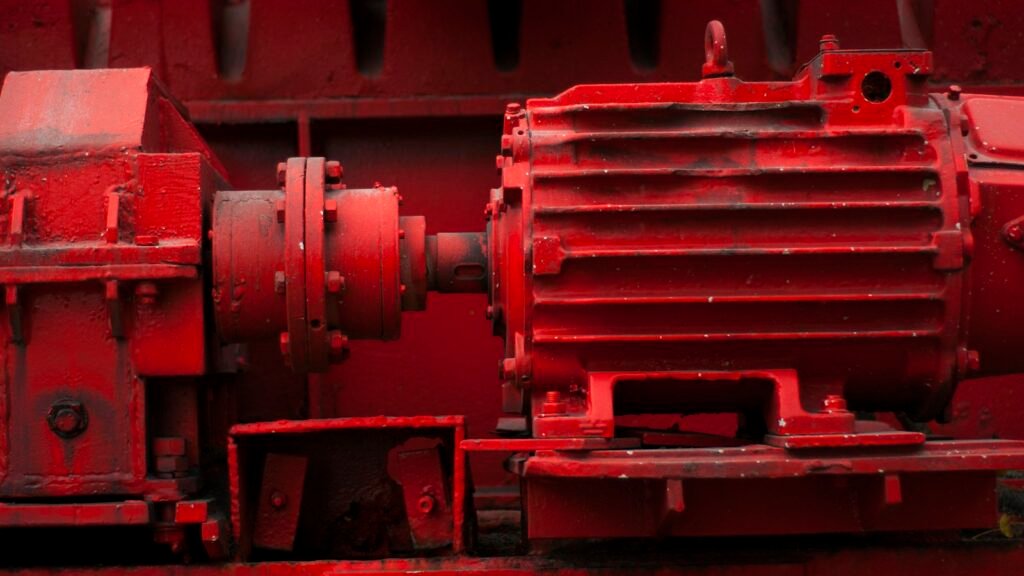
The fire pump turns a water tank into a network that delivers the designer’s flow and pressure. That is why fire pump selection starts with the hydraulic calculations for the system the pump will serve, not with a catalogue or with a size used on another project.
This guide explains the figures in a pump offer: flow in GPM and m³/h, pressure in bar and psi, the rated duty point and the NFPA 20 performance curve. It also covers each pump’s role, controllers, suction conditions and handover documents.
Key takeaways
- Flow and pressure come from the designer’s hydraulic calculations, not estimates.
- Under NFPA 20, a centrifugal fire pump must deliver 150% of rated flow at no less than 65% of rated pressure, and its churn pressure must not exceed 140% of rated pressure at rated speed.
- The usual set is an electric main pump, a diesel standby pump and a jockey pump to make up for leakage.
- Correct suction comes first; a bigger motor cannot fix poor suction.
- The certified manufacturer’s curve, the datasheet, the factory test report and the site acceptance test are the core handover documents.
In this article
- Where does fire pump selection start?
- Flow and pressure: reading the units correctly
- The rated duty point and the NFPA 20 performance curve
- The role of each pump: electric, diesel and jockey
- Controllers and suction conditions
- Documents needed before supply and handover
- Practical steps from selection to commissioning
- Common mistakes in fire pump selection
- 3PUMP sets available in Egypt
- Frequently asked questions
- Conclusion
Where does fire pump selection start?
The pump comes at the end of a chain of design decisions. The designer defines the systems it serves (sprinklers, hose cabinets, external hydrants), calculates the demand of the hydraulically most demanding area and adds any hose allowance. The result is two figures: required flow, and required pressure at the pump discharge after friction losses and elevation differences.
Capacity cannot be set without hydraulic calculations by a qualified designer, approved under the Egyptian fire protection code and the approving authority’s requirements. Floor count, building area or the pump on a similar project are not a valid basis. Figures here are illustrative only, not a recommendation for any project.
NFPA 20 (latest edition 2025) is a widely used technical reference for pump rooms in Egypt and the region. The legally binding reference is what the Egyptian code and the approving authority set; NFPA 20 supplies the technical detail the designer adopts or the contract calls for.
Flow and pressure: reading the units correctly
Pumps are usually offered in US gallons per minute (GPM) and bar or psi, while local calculations may use m³/h or L/min. Mixed units are a common source of error when comparing offers. For conversion:
- 1 GPM is about 0.227 m³/h, or 3.785 litres per minute.
- 1 bar is about 14.5 psi, which is roughly 10.2 metres of water column.
Rated pressure is the net pressure the pump adds between suction and discharge at rated flow. Network pressure is that plus suction pressure. An offer must state whether its figure is net or discharge pressure, and offers must be compared on the same basis.
| Duty point | Flow (approx. m³/h) | Pressure (approx. psi) | 150% flow (GPM) | Minimum pressure at 150% (bar) |
|---|---|---|---|---|
| 500 GPM @ 8 bar | 113.6 | 116 | 750 | 5.2 |
| 750 GPM @ 9 bar | 170.3 | 130.5 | 1125 | 5.85 |
| 1000 GPM @ 10 bar | 227.1 | 145 | 1500 | 6.5 |
| 1500 GPM @ 10 bar | 340.7 | 145 | 2250 | 6.5 |
| 1500 GPM @ 12 bar | 340.7 | 174 | 2250 | 7.8 |
These figures come only from unit conversion and the 65% rule. Actual performance is read from the certified manufacturer’s curve.
The rated duty point and the NFPA 20 performance curve
Meeting the rated point is not enough. NFPA 20 sets conditions on the whole curve, because real demand in a fire may differ from the design point. For centrifugal pumps, including horizontal split-case pumps:
- Churn (shut-off) point: at zero flow, pressure must not exceed 140% of rated pressure at rated speed.
- Rated point: 100% of rated flow at no less than 100% of rated pressure.
- Overload point: 150% of rated flow at no less than 65% of rated pressure.
In practice, the calculated demand should sit in the middle of the curve. Specialist references note that demand should not exceed 150% of rated flow, and that running near that limit makes performance more sensitive to suction. Churn pressure plus the highest static suction pressure must be checked against the rating of pipes, valves and fittings. If it is higher, the designer picks a pump with a flatter curve or uses a solution the standard allows.
The role of each pump: electric, diesel and jockey
Electric main pump
The electric pump carries the main duty and needs a reliable power supply. The designer sets its source, routing and protection under the Egyptian code’s electrical requirements and whatever the design adopts from NFPA 20 and NFPA 70.
Diesel standby pump
The diesel pump gives a power source independent of the grid. Its room needs ventilation, a fuel tank sized by the designer, and an exhaust route. Under NFPA 20, the diesel engine needs two independent starting sources, and the controller alternates between them.
Jockey pump
A small pump that keeps the network pressurised and makes up for minor leakage, so the main pump does not start needlessly. Its flow must be less than one sprinkler’s, so that when a sprinkler opens, pressure drops and the main pump starts. The designer sets the start and stop pressures of each pump in a clear sequence: jockey first, then electric, then diesel.
Controllers and suction conditions
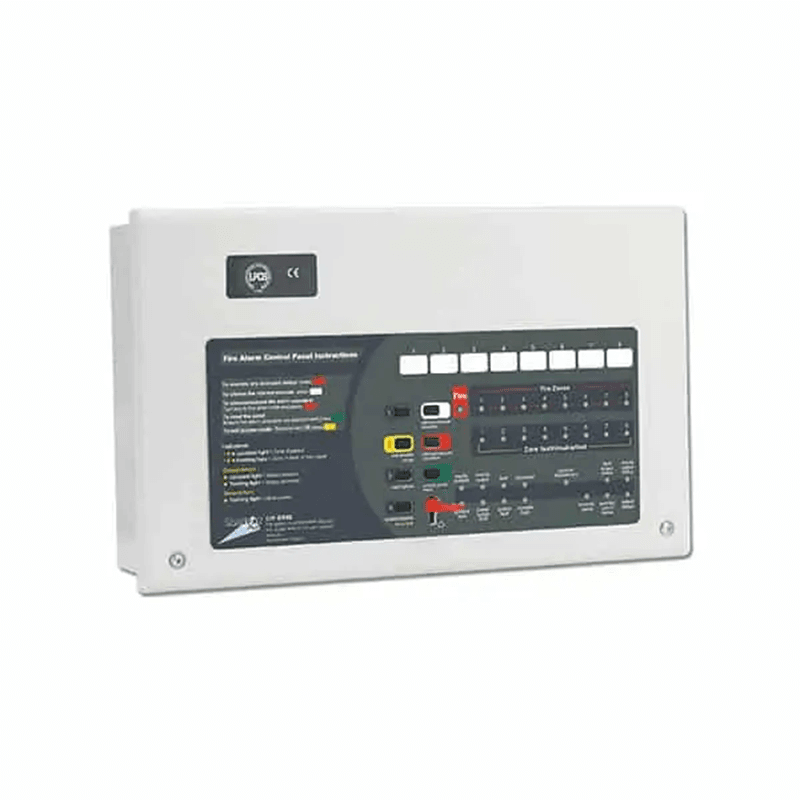
NFPA 20 requires the controller to be listed for fire pump service. It starts the pump automatically on pressure drop, allows local manual operation, and records pressure and run events. The motor starting method, such as direct-on-line or star-delta, is agreed between the mechanical and electrical engineers based on motor power and supply limits.
Suction conditions decide whether the pump can achieve its curve. Check:
- Tank level relative to the pump centreline. Horizontal pumps are usually designed for positive (flooded) suction; a water source below the pump has its own solutions in the standard.
- Suction pipe diameter and water velocity, and avoiding elbows and fittings that cause turbulence close to the pump inlet.
- An eccentric reducer on the suction line where needed, to avoid air pockets.
- Net positive suction head available (NPSHa) compared with the NPSH required (NPSHr) on the manufacturer’s curve, especially at 150% flow.
Documents needed before supply and handover
Documents prove that the pump supplied is the pump designed. The usual set is:
- Certified performance curve: for the model, the actual impeller diameter and the rated speed.
- Datasheet: with the duty point, motor power, materials, dimensions and connection sizes.
- Factory test report: for each pump by serial number, covering at least the churn, 100% and 150% points.
- Controller documents: wiring diagrams, pressure settings and operating instructions.
- Site acceptance test: after flushing and hydrostatic testing of suction and discharge lines, pressures and flows are measured at churn, 100% and 150%, compared with the manufacturer’s curve after speed correction, and automatic and manual starting are tested.
After handover, the pump enters a periodic inspection, testing and maintenance programme. NFPA 25 (2026 edition) is the technical reference, together with the manufacturer’s instructions and the competent authority’s requirements.
Practical steps from selection to commissioning
- Approve hydraulic calculations for the most demanding area, with hose allowances.
- Set the duty point so demand falls in a suitable part of the curve.
- Check churn plus maximum suction pressure against component ratings.
- Review suction, tank capacity and level, and pump room design.
- Coordinate power supply, starting method, and diesel fuel, ventilation and exhaust.
- Review the curve, datasheet and factory test report before shipment.
- Run the site acceptance test with the consultant, and hand over documents and operating instructions.
Common mistakes in fire pump selection
- Copying capacity from a similar project without calculations for this one.
- Comparing a net-pressure offer with a discharge-pressure offer on different bases.
- Ignoring churn plus suction pressure, which can push valves and pipes above their rating.
- Oversizing “to be safe”, which raises churn pressure and cost for no benefit.
- Neglecting suction design, or fitting elbows directly at the pump inlet.
- Setting jockey flow close to one sprinkler’s flow, so the main pump fails to start when needed.
- Accepting a pump with no serial-numbered factory test report.
3PUMP sets available in Egypt
3PUMP sets, supplied through AZEIDK Egypt, are complete fire pump sets: an electric main pump, a diesel standby pump and a jockey pump, with their controllers on a common base. The duty points currently available in Egypt are Non-UL (non-listed). UL-listed or FM-approved models are manufactured and supplied on request.
| Duty point | Listing status | Notes |
|---|---|---|
| 500 GPM @ 8 bar | Non-UL / Non-Listed | — |
| 750 GPM @ 9 bar | Non-UL / Non-Listed | — |
| 1000 GPM @ 10 bar | Non-UL / Non-Listed | — |
| 1500 GPM @ 10 bar | Non-UL / Non-Listed | — |
| 1500 GPM @ 12 bar | Non-UL / Non-Listed | Datasheet coming soon |
If the project requires a listed or approved pump, say so clearly when ordering. See our fire pump systems section; catalogues are on our documents page.
Frequently asked questions
Can fire pump capacity be sized from the number of floors?
No. The designer sets capacity from hydraulic calculations for the most demanding area, including hose allowances, losses and elevation, under the Egyptian code and the approving authority’s requirements.
What does “65% of pressure at 150% of flow” mean?
It is an NFPA 20 requirement for centrifugal pumps. At one and a half times rated flow, net pressure must not fall below 65% of rated pressure, giving a margin if demand rises above the design point.
Why do we need a jockey pump if there are already two main pumps?
The network slowly loses pressure through minor leakage. The jockey pump makes up the loss, so the main pump does not run needlessly and the network stays at its set pressure.
Are the 3PUMP sets supplied in Egypt UL-listed or FM-approved?
The duty points currently available in Egypt are non-listed. Listed or approved models are made and supplied on request; state this in the purchase order if the project requires it.
What is the difference between the factory test and the site acceptance test?
The factory test proves performance on the test bench before shipment. The site acceptance test proves it after installation, under actual suction, power and control conditions, against the manufacturer’s curve.
Conclusion
Fire pump selection rests on three things: approved hydraulic calculations that fix the duty point, a pump whose curve meets the NFPA 20 limits at churn, rated point and 150% flow, and a correct installation of the suction line and controllers. Documents and the site acceptance test prove it. Settling these early reduces site changes and ensures the set performs when needed.
Read also: automatic sprinkler systems in Egypt and fire protection valves guide.
Has your consultant fixed the required flow and pressure for the fire pump? Send us the hydraulic calculations or the project data, and we will propose the right fire pump set (electric + diesel + jockey) with its datasheet. Talk to the AZEIDK Egypt team