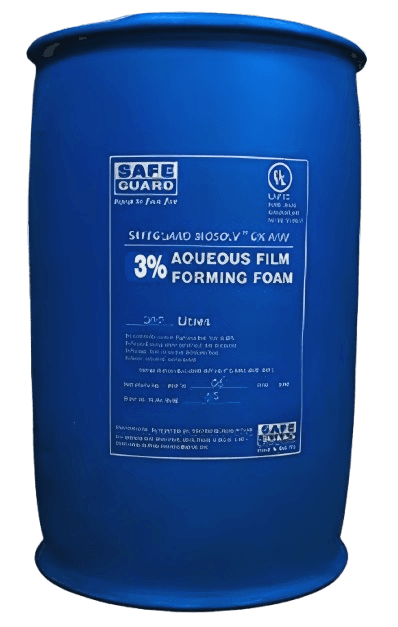
Foam fire suppression systems are the engineered answer to flammable liquid fires involving fuel, oil and solvents, because these liquids usually float on water and keep burning. The system mixes foam concentrate with water at a set ratio, then aerates the solution into a blanket that separates the fuel from oxygen, suppresses vapors and cools the surface. The fuel decides the concentrate, and design follows NFPA 11 and the adopted Saudi Fire Protection Code (SBC 801).
Key takeaways
- Choose the concentrate by fuel: hydrocarbons, or water-miscible polar solvents such as alcohols, which need an alcohol-resistant concentrate.
- NFPA 11 (2024 edition) governs design and now includes the former NFPA 16 foam-water sprinkler rules; inspection, testing and maintenance moved to NFPA 25.
- UL 162 evaluates equipment and specified concentrates together, so never swap concentrate without checking the listing.
- Synthetic fluorine-free foam (SFFF) is not a drop-in replacement for aqueous film-forming foam (AFFF); a change needs engineering review and system cleaning.
- The EU restricted per- and polyfluoroalkyl substances (PFAS) in firefighting foams in October 2025, with transition periods of up to 10 years; on Saudi projects the owner and authorities decide.
- Manufacturers recommend annual laboratory testing of a concentrate sample; verify the actual proportioning ratio at handover and in maintenance.
In this article
- How foam fire suppression systems work
- Types of foam concentrate and how to choose
- Fluorine-free foam and the move away from AFFF
- System components: proportioning, discharge and actuation
- Where foam systems are used on Saudi projects
- Step-by-step foam system design
- Common site mistakes
- Inspection, testing, maintenance and cost
- How AZEIDK helps
- FAQ
How foam fire suppression systems work
When a flammable liquid burns, what actually burns is the vapor rising from its surface. NFPA 11 defines foam as a stable aggregation of bubbles of lower density than oil or water, so it floats on the liquid and works in three ways at once: it separates fuel from oxygen, suppresses vapor release and cools the surface with the water it carries. Some fluorinated concentrates, such as AFFF, also spread a thin aqueous film over hydrocarbon fuel.
Expansion ratio
Expansion ratio is the volume of finished foam relative to the volume of solution. NFPA 11 classes foam as low expansion (up to 20:1), medium expansion (20:1 to 200:1) and high expansion (above 200:1). Low-expansion foam is used for fuel tanks, bunds and foam-water sprinkler systems, while high-expansion foam fills enclosed volumes through dedicated generators.
Types of foam concentrate and how to choose
The costliest foam mistake is a concentrate that does not suit the fuel. Polar solvents such as alcohols, ketones and esters mix with water and weaken ordinary foam, so they need alcohol-resistant concentrates that form an insoluble polymer membrane under the foam blanket. The main types are:
| Type | Fluorinated? | Suitable fuels | Selection notes |
|---|---|---|---|
| AFFF | Yes | Hydrocarbons | Forms an aqueous film; not for polar solvents on its own |
| AR-AFFF (alcohol-resistant) | Yes | Hydrocarbons and polar solvents | The datasheet gives the listed ratio for each fuel type |
| FP and FFFP (fluoroprotein and film-forming fluoroprotein) | Yes | Hydrocarbons; alcohol-resistant versions exist | Protein base with fluorinated additives |
| SFFF (fluorine-free) | No, by definition | Hydrocarbons; AR-SFFF versions also cover polar solvents | Not a drop-in replacement; select a listing that covers the hazard and the installed hardware |
The 2026 edition of NFPA 10 defines SFFF as a foam concentrate based on a mixture of hydrocarbon surface active agents that is not formulated to contain PFAS, as our NFPA 10 2026 news explains. The ratio printed on the drum, such as 3% or 6%, is the share of concentrate in the solution, so a 3% product needs half the storage volume of a 6% product for the same amount of solution.
Fluorine-free foam and the move away from AFFF
The market is moving away from fluorinated concentrates because of environmental and health concerns. On 2 October 2025 the European Union adopted Commission Regulation (EU) 2025/1988, which restricts PFAS in firefighting foams at 1 mg/L or more for the sum of all PFAS. The general ban applies from 23 October 2030, with transition periods of 12 months to 10 years depending on the use. FM Approvals has also updated Approval Standard 5130 for foam systems, adding Class B hydrocarbon fire tests for SFFF concentrates and tests for variable-viscosity proportioners.
On Saudi projects, the concentrate type follows the owner’s specification, the insurer and the authorities. Switching is not a drum change: EU transition guidance stresses that there is no one-size-fits-all solution and that PFAS residues can contaminate the new foam unless the system is properly cleaned. A transition covers:
- Reviewing the hazard and fuels, and selecting a concentrate listed or approved for them.
- Confirming that the proportioners and discharge devices are covered by the new concentrate’s listing and suit its viscosity.
- Cleaning the tank and pipework to the manufacturer’s instructions, and collecting and disposing of rinse water safely.
- Retesting the proportioning ratio and updating system documents and the maintenance contract.
System components: proportioning, discharge and actuation
Proportioning methods
- Bladder tank: a pressure vessel holding concentrate in a flexible bladder; system water squeezes the bladder and drives concentrate to a ratio controller, with no separate foam pump.
- Inline eductor: draws concentrate by pressure difference; simple, but sensitive to inlet pressure and hose length.
- Balanced pressure proportioning: uses a foam pump and balancing valves, suiting large multi-outlet systems.
Discharge devices and actuation
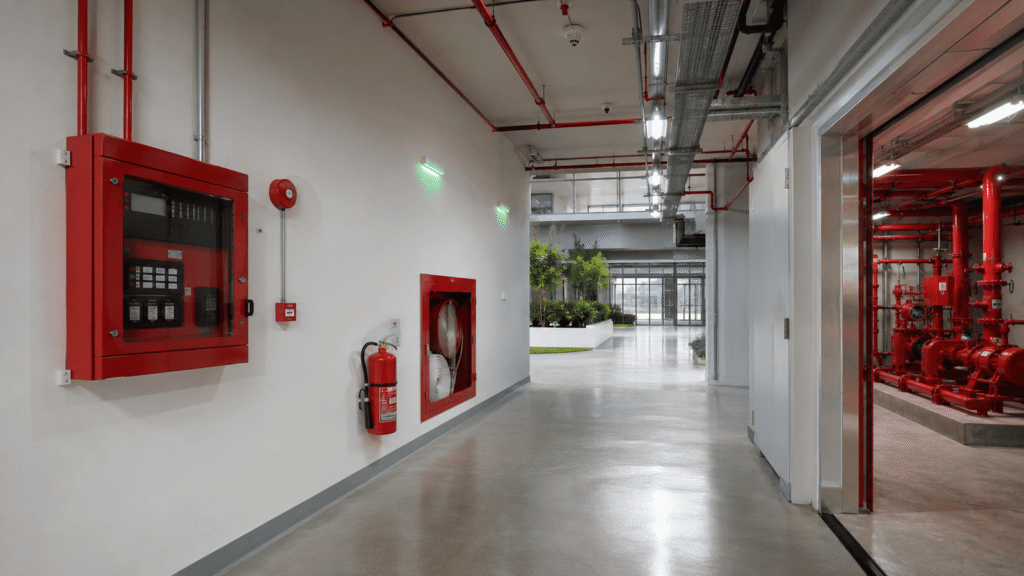
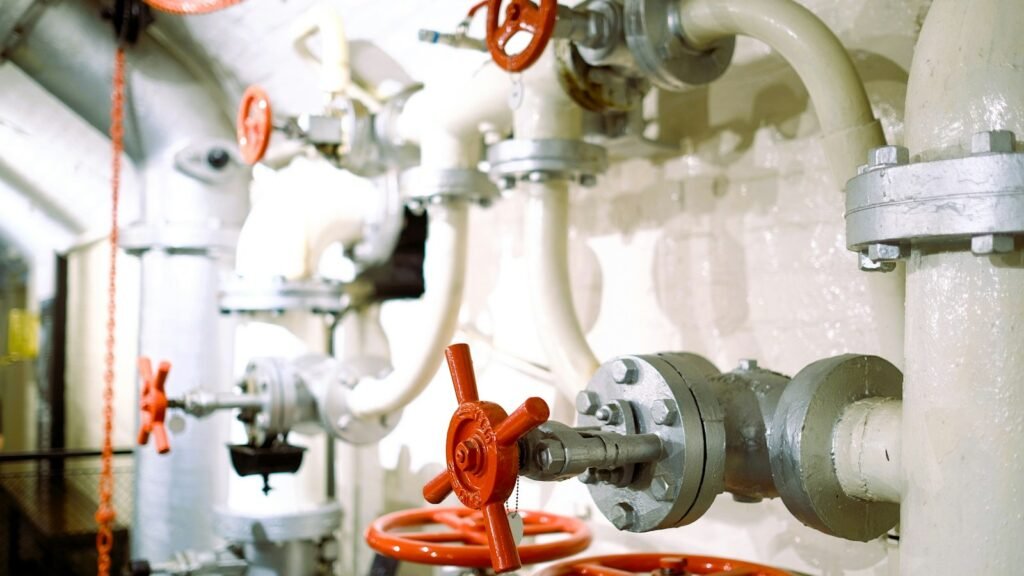
Discharge devices include foam-water sprinklers and spray nozzles, foam chambers on fuel tanks, fixed and mobile monitors, high-expansion generators and hose reels with inductors. Most fixed systems are actuated through a deluge valve opened by heat or flame detection or manually, as in a deluge system, and are monitored by the fire alarm panel for alarm, valve supervision and faults.
Where foam systems are used on Saudi projects
- Fuel tank farms, loading racks and filling facilities.
- Generator rooms and day tanks in large facilities, where the risk assessment calls for it.
- Aircraft hangars: NFPA 409 sets protection by hangar group, and its 2022 edition removed the foam requirement for Group II hangars that prohibit hazardous activities such as fuel transfer and welding, so check the hangar group against the current 2026 edition.
- Chemical, paint and solvent warehouses and production lines using flammable liquids, as our industrial fire protection guide explains.
- Oil-filled transformer areas and their bunds, where the risk assessment recommends it.
The reference standards are NFPA 11 for foam systems, NFPA 30 (Flammable and Combustible Liquids Code), NFPA 409 for aircraft hangars, or EN 13565-2 for design, construction and maintenance on projects designed to European standards, with the EN 1568 series for concentrates. In Saudi Arabia, designs go to the consultant and Civil Defense, SBC 801 and Civil Defense set the applicable editions, and some industrial owners add their own standards. For the difference between listing and approval, see our UL Listed vs FM Approved guide.
Step-by-step foam system design
- Define the hazard: hydrocarbon or polar liquid, quantity, storage or process, and potential spill area.
- Select concentrate type, ratio and expansion, and agree with the owner whether fluorine-free foam is required.
- Take application rate and discharge time from the adopted standard and the product listing, never from another project.
- Calculate concentrate quantity plus any reserve the specification requires, then size the tank.
- Choose a proportioner listed with the concentrate that covers the required flow range.
- Run hydraulic calculations for the water supply, fire pump and pipework.
- Design detection, actuation and the alarm interface, plus containment and drainage of firewater and test water.
- Obtain approvals, install and commission, including verification of the actual proportioning ratio.
Common site mistakes
- Plain AFFF installed where polar solvents are stored, so the foam fails on first use.
- Different concentrate types or brands mixed in one tank without a compatibility check.
- Proportioners or discharge devices not listed with the concentrate in use.
- Handover without a proportioning test, so nobody knows the ratio is correct.
- Switching to fluorine-free concentrate without cleaning the system or reviewing the listing.
- Concentrate stored in direct sun or outside the datasheet temperature range.
- No plan to contain foam-contaminated test water and firewater.
Inspection, testing, maintenance and cost
Inspection, testing and maintenance moved out of NFPA 11; since the 2023 edition, Chapter 11 of NFPA 25 covers foam systems as well as foam-water sprinkler systems, at the intervals in the adopted edition. Manufacturers recommend annual testing of a concentrate sample to confirm its properties remain in specification. Routine work covers:
- Concentrate level, tank and bladder condition, and leaks.
- Valve positions, strainers and discharge devices.
- A proportioning test by the manufacturer’s method, such as refractive index, where an environmentally friendly test liquid of similar viscosity can avoid discharging real foam.
- Detection, actuation and the alarm interface.
Cost is driven by hazard area and application rate, which set concentrate quantity, tank and pump size; then concentrate type, proportioning method, number of discharge devices, containment, laboratory testing, and cleaning when moving from AFFF to fluorine-free foam.
How AZEIDK helps
AZEIDK delivers foam systems through our special fire suppression solutions, from studying the site and hazard, through engineering design and calculations, technical supply, installation, testing and commissioning and Civil Defense approval support, to maintenance and technical follow-up. Brands AZEIDK supplies include SafeGuard firefighting foam, with AFFF concentrates at 3% and 6%, and Falcon Gold, whose range with AZEIDK includes a foam bladder tank and the FG4001RF integrated foam and water hose cabinet.
FAQ
Why can’t water alone put out gasoline and oil fires?
Most flammable liquids are lighter than water and do not mix with it, so water sinks beneath them while they keep burning, and the stream can spread the fire. Foam is less dense than oil or water, so it blankets the liquid, separating it from oxygen, suppressing vapors and cooling the surface.
What is the difference between 3% and 6% foam concentrate?
The figure is the share of concentrate in the solution: a 3% concentrate is mixed as 3 parts concentrate to 97 parts water, a 6% concentrate as 6 to 94. A 3% product therefore needs half the storage volume for the same solution. The ratio should match the proportioner setting and the system listing, so never swap one for the other without resetting.
What is alcohol-resistant foam and when do I need it?
It is a concentrate that forms a polymer membrane over water-miscible polar solvents, such as alcohols, ketones and esters, protecting the foam blanket. You need it if your facility stores or uses these liquids, including alcohol-blended fuels, so confirm the fuel types before the concentrate is selected.
Do we have to switch to fluorine-free foam?
The market is moving away from PFAS concentrates, and the EU restricted them in a regulation adopted in October 2025, with transition periods. On your project, the owner, insurer and authorities decide, along with the availability of a listed concentrate for your system. A switch needs listing review, hardware checks and cleaning, so engineer it first.
Can different foam concentrates be mixed?
Not without documented compatibility checks, which manufacturer guidance calls for before stored concentrates are mixed with others. When changing supplier or type, empty and clean the tank to the manufacturer’s instructions and confirm that the listing covers the new concentrate with the installed proportioner and discharge devices.
Storing fuel or solvents, or planning a move from AFFF to fluorine-free foam? Send us the hazard details and existing system data, and we will review the concentrate, listing and transition plan. Contact the AZEIDK team