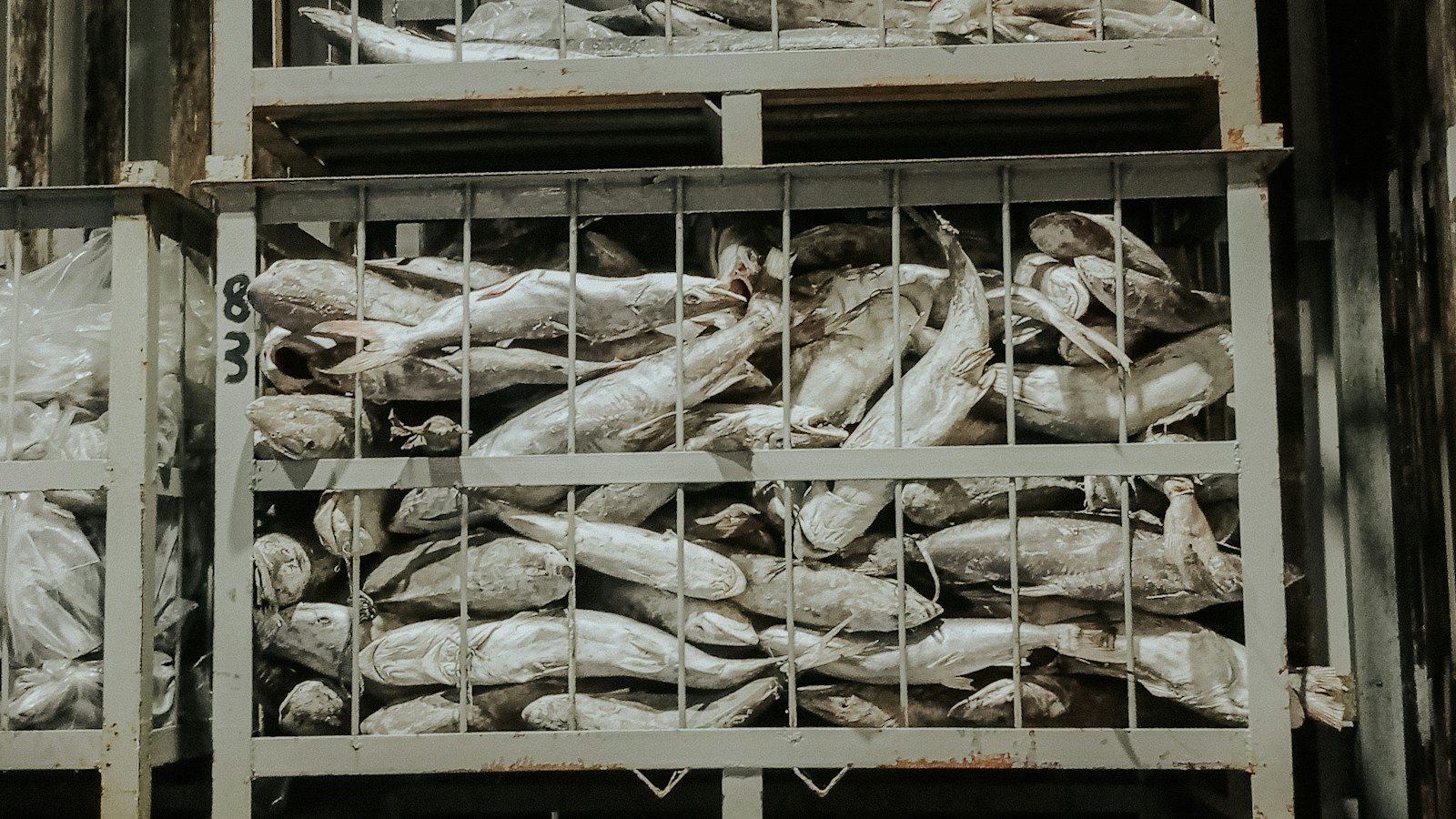
Cold storage fire protection differs from ordinary warehouse protection in one basic way: standing water in pipes that pass through a freezer turns to ice and disables the system. Freezers are therefore protected by dry sprinklers fed from wet pipe in conditioned space, or by double-interlock preaction with dried air or nitrogen, plus cold-rated detection and panels that do not spread fire, all designed to NFPA 13 and the Saudi Fire Protection Code (SBC 801).
Key takeaways
- NFPA 13 requires pipe that cannot be kept at or above 4°C to be protected against freezing, so wet pipe cannot run inside a freezer.
- Room construction decides the solution: box-in-a-box freezers usually get dry pendent sprinklers; walls-to-deck freezers usually get double-interlock preaction.
- Ice plugs are a serious hidden failure, caused by moisture in the supply air or water left after a test or trip.
- Plastic packaging and pallets raise the commodity class, which changes sprinkler type and density.
- NFPA 13 requires a 30% larger design area for dry-pipe and double-interlock systems, raising water and pump demand.
- FM Approved Class 1 wall and ceiling panels are tested so that they will not self-propagate a fire.
In this article
- Why cold storage is different from an ordinary warehouse
- Room construction decides the sprinkler system
- Comparing sprinkler options for cold storage
- Detection and alarm at low temperatures
- Saudi requirements and design steps
- Common site mistakes
- Inspection, testing and maintenance: preventing ice plugs
- What drives the cost?
- How AZEIDK helps
- FAQ
Why cold storage is different from an ordinary warehouse
A cold store keeps every question of an ordinary warehouse, from commodity to storage height, and adds four problems of its own.
Freezing inside the network
NFPA 13 requires pipe to be protected against freezing wherever any part of the system cannot be kept at or above 4°C (40°F). Standing water inside a freezer turns to ice that blocks or splits the pipe, and the failure rarely shows on any panel.
Storage density and packaging
Refrigerated space is expensive, so it is filled with high racks and dense storage. The same product may be a low commodity class in non-plastic packaging and a higher class on plastic trays or pallets, which drives sprinkler type, density and the need for in-rack sprinklers, as our guide to high-rack warehouse protection explains.
Insulated panels
Most cold rooms are built from insulated sandwich panels, and some cores are combustible and can carry fire inside a wall or ceiling, out of the sprinklers’ reach. FM Approvals tests interior wall and ceiling panels to Approval Standard 4880 for limited fire spread and fuel contribution, and Class 1 approved panels will not self-propagate a fire.
Refrigeration plant and electrics
Compressor rooms, electrical panels and defrost heaters are real ignition sources, and ammonia plants have their own leak detection and ventilation requirements to coordinate with the fire system.
Room construction decides the sprinkler system
Before choosing a system, ask what is above the freezer ceiling. Sprinkler manufacturers describe two main cases:
- Box-in-a-box: the freezer is an insulated box inside a larger building, with a space above it that does not freeze. Wet pipe runs in that space and feeds dry pendent sprinklers through the insulated ceiling.
- Walls-to-deck: the walls run up to the roof deck, so the building itself is the freezer and there is nowhere for wet pipe. The usual answer is double-interlock preaction, which admits water only after both a detection signal and a loss of air pressure from an operated sprinkler, so a false alarm or one broken head does not fill the pipes.
In both cases, confirm that the sprinkler is listed or approved for the actual ceiling height, storage height, commodity class and arrangement.
Comparing sprinkler options for cold storage
Our guide to wet, dry, preaction and deluge sprinkler systems covers the general differences. In refrigerated applications the practical comparison is:
| Option | Typical fit | Strengths | Watch out for |
|---|---|---|---|
| Dry pendent sprinklers fed from wet pipe | Box-in-a-box freezers | Simple wet network; no standing water in the cold zone | Dry sprinkler length to suit the panel; sealed penetrations |
| Dry-pipe system | Large cold areas that can accept delayed water delivery | Needs no detection to operate | Delivery delay, 30% larger design area, ice plugs if air is not dried |
| Double-interlock preaction | Walls-to-deck freezers | No water in the pipes from a false alarm or one broken head | Cold-rated detection, a listed releasing panel, 30% larger design area |
| Antifreeze system | Limited applications | Response close to a wet system | New systems generally limited to listed antifreeze (UL 2901); check the listing’s lowest temperature |
Can ESFR sprinklers protect a freezer?
Early suppression fast response (ESFR) sprinklers were developed mainly for wet systems. Some manufacturers offer FM Approved dry pendent ESFR sprinklers for cold storage, but these are installed only on wet pipe in conditioned space above the insulated ceiling. Never assume that an ESFR head from your ambient warehouse suits a freezer.
Ask your insurer early
A carrier that applies FM Global data sheets may ask for Data Sheet 8-9 (storage) and Data Sheet 8-29 (refrigerated storage) alongside NFPA 13. Ask before design, not after installation.
Detection and alarm at low temperatures
In a preaction system, detection is part of suppression. Spot detectors in freezers face datasheet temperature limits, frost when doors open and poor access above racks, so common choices are:
- Linear heat detection cable: run along the ceiling or between racks and suited to harsh conditions.
- Aspirating smoke detection: sampling pipes draw air from the room to a detector installed where it is easy to reach.
Our fire detector selection guide compares the options. Confirm that the detector is listed for the actual room temperature and that the releasing panel is listed to operate the preaction valve.
Saudi requirements and design steps
The 2024 edition of the Saudi Building Code has been mandatory since 30 June 2025. SBC 801 and Civil Defense requirements decide what a facility needs and which NFPA 13 edition applies, and the consultant and then Civil Defense review drawings and hydraulic calculations before installation, as our SBC 801 guide explains; see also our NFPA 13 sprinkler standard guide. The practical steps are:
- Document products, packaging, pallets, storage method and height in every room.
- Record each room’s temperature, construction and what lies above the ceiling.
- Choose the system per zone: wet in conditioned areas; dry sprinklers, dry pipe or preaction in cold areas.
- Select sprinklers listed for the ceiling height, storage height and commodity, and decide on in-rack sprinklers.
- Run hydraulic calculations with the design area increase NFPA 13 requires for dry and double-interlock systems, then size fire pumps and water storage.
- Design a dried-air or nitrogen generator supply with low-pressure supervision.
- Give branch lines and mains the pitch NFPA 13 requires in refrigerated areas, and place auxiliary drains where they can be reached.
- Interface cold-rated detection with the releasing panel, and review panels and pipe penetrations with the architect and refrigeration contractor.
- Submit for approval, then install, test and hand over with written operating and draining instructions.
Common site mistakes
- Wet compressed air: a standard compressor without a dryer feeding a dry network in a freezer.
- Poor draining after a trip: the system is flooded during a test or false trip, then drained in a hurry, leaving water at low points.
- Unsealed penetrations: gaps around dry sprinklers let warm, moist air in to condense and freeze.
- Commodity class on paper only: designed for cartons, then packaging changes to plastic trays without review.
- Heads not listed for the application: ESFR or ordinary storage sprinklers in an arrangement never approved for cold.
- Taller racks added later: storage height raised without redesign.
Inspection, testing and maintenance: preventing ice plugs
NFPA 25 sets inspection, testing and maintenance intervals for water-based systems in the adopted edition, and requires the auxiliary drains on dry and preaction systems to be operated each time the system operates. A cold store contract should also name:
- Monitoring air pressure; repeated drops point to leaks that admit moisture.
- Servicing the air dryer or nitrogen generator and checking the specified air dryness.
- Checking pipe sections that enter cold rooms for ice, by dismantling or ultrasonic inspection.
- Thawing ice with steam, hot water or other safe heat, never a torch.
- Testing detection and the preaction valve interface under NFPA 72.
What drives the cost?
There is no typical cost per square meter for cold stores. The main drivers are the system type, since dry and preaction cost more than wet pipe; the larger design area and the pump and tank capacity that follows; the number of rooms and their temperatures; storage height, commodity class and in-rack sprinklers; the dried-air or nitrogen supply and detection; and working inside a facility that cannot stop operating.
How AZEIDK helps
AZEIDK has worked in the Saudi market for more than 16 years. Through our fire fighting systems solutions we provide site surveys, engineering design and calculations, technical supply, installation, testing and commissioning, Civil Defense approval support and annual maintenance contracts. Brands AZEIDK supplies include TYCO sprinklers, among them DS-1 dry sprinklers for freeze-prone areas, plus Victaulic sprinklers, KDI pipes, Jack Pump fire pumps and Context Plus fire alarm panels, each checked against its listing. For a food cold-chain example, see our article on seafood warehouse fire safety.
FAQ
Why can’t a wet sprinkler system be used inside a freezer?
Standing water in the pipes freezes, blocking or splitting them without any warning on a panel, and NFPA 13 requires pipe to be protected against freezing wherever it cannot be kept at or above 4°C. Freezers therefore use dry pendent sprinklers fed from wet pipe in conditioned space, a dry-pipe system or a preaction system.
What is the difference between dry-pipe and double-interlock preaction?
A dry-pipe system holds compressed air, and its valve opens when pressure falls after a sprinkler operates. Double-interlock preaction admits water only after both a detection signal and a loss of air pressure, lowering the risk of water entering and freezing after a false alarm or broken head. NFPA 13 requires a 30% larger design area for both.
What are ice plugs and how do I find them?
Ice plugs are blocks of ice that form inside the pipes from moisture in the supply air or water left after a test or trip, and they stop water reaching the sprinklers. They rarely show on a panel, so check the pipe sections entering cold rooms by dismantling or ultrasonic inspection, and prevent them with dried air or nitrogen.
Can ESFR sprinklers be used in freezers?
ESFR sprinklers were designed mainly for wet systems and belong in cold storage only in an arrangement listed or approved for that use, such as FM Approved dry pendent ESFR sprinklers on wet pipe in conditioned space above the insulated ceiling. Confirm the listing and datasheet before fixing the rack layout.
Do insulated panels increase fire risk in cold rooms?
Some insulation cores are combustible and can carry fire inside walls and ceilings, beyond the sprinklers’ reach. Panels approved as Class 1 by FM Approvals under Approval Standard 4880 are tested so that they will not self-propagate a fire. Check the code, your insurer and the consultant before you buy.
Do you have a cold store or freezer that needs reliable fire protection? Send us your drawings and storage data, and we will review the system type, detection and approval requirements. Contact the AZEIDK team