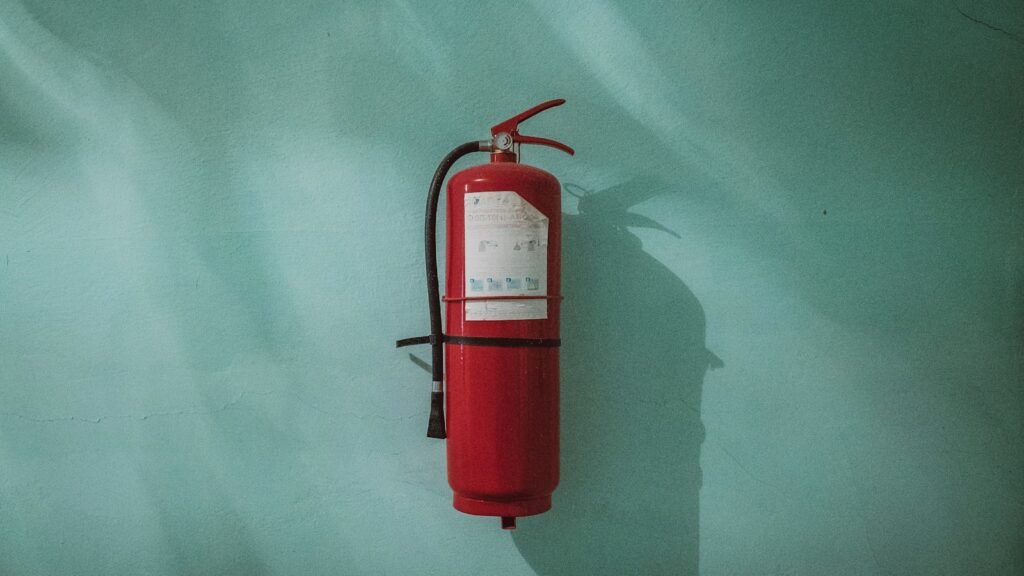
Electric and diesel fire pumps do the same job: they deliver the flow and pressure the fire protection system needs. An electric fire pump depends on a reliable, protected power supply; a diesel fire pump carries its own fuel but needs a larger room, batteries, cooling, an exhaust and more frequent test runs. On Saudi projects, power reliability, building height, the approved design and NFPA 20 requirements decide the choice.
Key takeaways
- The pump can be identical; the real choice is the driver and its energy source.
- NFPA 20 (2025 edition) requires alternate power for electric fire pumps in high-rise buildings or where the supply is not reliable, unless, for example, a backup diesel pump is installed.
- Diesel pumps need fuel for at least 12 hours, two battery banks, cooling, combustion air and an exhaust.
- Under NFPA 25 (2026 edition), diesel pumps run weekly, electric pumps weekly or monthly, and both get an annual flow test.
- A common arrangement: electric main pump, diesel standby pump and jockey pump.
- Check the listing of the exact pump, driver and controller models, not just the brand.
In this article
- How electric and diesel fire pumps differ
- Electric vs diesel fire pumps: side-by-side comparison
- Power supply requirements for an electric fire pump
- Diesel fire pump requirements: fuel, batteries, cooling and ventilation
- Electric, diesel or both? Choosing for a Saudi project
- Step-by-step: selecting the right fire pump arrangement
- Common mistakes, routine testing and what drives cost
- How AZEIDK helps
- FAQ
How electric and diesel fire pumps differ
The pump, whether split-case, end-suction or vertical turbine, is selected for the duty point (flow and pressure) from the hydraulic calculations. The driver turns it: an electric motor started by a controller listed for fire pump service, or a listed diesel engine with its own controller that cranks from batteries and runs on fuel stored in the pump room. Electric is simpler and cheaper to run where the supply is dependable; diesel buys independence from the grid with more equipment, space and care.
Electric vs diesel fire pumps: side-by-side comparison
| Aspect | Electric fire pump | Diesel fire pump |
|---|---|---|
| Energy source | Dedicated, protected supply, plus an alternate source where required | Engine with an on-site fuel tank and two starting battery banks |
| Reliability depends on | Supply stability, feeder protection, any transfer arrangement | Fuel quality and level, batteries, cooling and ventilation |
| Space | Smaller: motor, controller, transfer switch where used | Larger: engine, fuel tank, exhaust, combustion and cooling air |
| Room sprinkler classification | Ordinary Hazard Group 1 | Extra Hazard Group 2 where a diesel driver or its fuel tank is in the room |
| No-flow test run (NFPA 25) | Weekly or monthly, at least 10 minutes | Weekly, at least 30 minutes |
| Typical use | Reliable supply, or with a diesel standby pump | Weak supply, remote or industrial sites, or as standby |
Power supply requirements for an electric fire pump
An electric pump is only as reliable as its supply. NFPA 20 (current 2025 edition, Section 9.3; see our NFPA 20 guide) requires at least one alternate power source where the normal source is not reliable or the building is a high-rise, unless a permitted arrangement such as a backup engine-driven pump is installed.
The authority having jurisdiction (AHJ), in Saudi Arabia usually Civil Defense, judges reliability using annex guidance on outage history and overhead lines. Under Article 695 of NFPA 70, the National Electrical Code (NEC), engineers check that:
- The supply is commonly tapped ahead of the main service disconnect, in a separate enclosure, so a building shutdown does not stop the pump.
- Feeders stay outside the building up to the pump room, or are protected by at least 50 mm (2 in.) of concrete, a 2-hour fire-rated assembly, or a listed electrical circuit protective system with a 2-hour rating.
- Overcurrent devices carry the locked-rotor current of the pump motor and jockey pump plus the full-load current of accessories, giving short-circuit protection only.
- A generator can start the pump with other loads running, connects through a fire pump transfer switch, and keeps starting voltage drop within Article 695 limits.
Diesel fire pump requirements: fuel, batteries, cooling and ventilation
- Fuel: NFPA 20 requires at least 12 hours at the manufacturer’s published consumption rate, plus 5% for expansion and 5% for sump; if the rate is unknown, 1 gal per hp (5.07 L per kW) plus the same allowances.
- Starting: the controller alternates between two battery banks on successive weekly runs.
- Cooling: usually a heat exchanger fed from the pump discharge; radiators are less common.
- Combustion air: critical in a Saudi summer. Air at the air cleaner inlet should not exceed 49°C (120°F), and output falls with heat and altitude, so select the engine on derated output.
- Exhaust: sized by calculation to keep back pressure within the engine listing.
- Room: sprinklered as Extra Hazard Group 2, heated above 4°C (40°F) where needed, and, since the 2025 edition, given alternate power for ventilation and heaters where normal power is unreliable.
Our fire pump room guide covers the full room setup.
Electric, diesel or both? Choosing for a Saudi project
Ask: is the supply accepted as reliable, is the building a high-rise, can an existing generator start the pump, and does the specification or insurer call for diesel? Common outcomes:
- Reliable supply, not a high-rise: an electric pump with a jockey pump, where the approved design allows.
- High-rise or doubtful supply: an electric pump with a generator, or an electric main pump with a diesel standby pump, which under NFPA 20 removes the need for alternate electrical power.
- Industrial, remote or weak-grid sites: a diesel main pump, or duplicate pumps as specified.
The role of the jockey pump
A jockey pump makes up minor leakage and holds pressure so the main pump does not start unnecessarily. Under NFPA 20 (2025 edition) it must be approved but need not be listed, must at least match normal leakage, and needs no alternate power; a main or standby fire pump must not serve as the jockey pump. Good practice keeps its flow below one sprinkler’s discharge.
Step-by-step: selecting the right fire pump arrangement
- Fix the duty point from the approved hydraulic calculations.
- Get the consultant and AHJ position on supply reliability and high-rise status in writing.
- Choose: electric, diesel, electric with diesel standby, or electric with a generator.
- Check the curve: at least 65% of rated pressure at 150% of rated flow, churn no more than 140% of rated pressure.
- Verify the exact pump, driver and controller models are UL listed or FM approved as specified (see our UL listed vs FM approved guide).
- Lay out the room: separation, access, drainage, ventilation, exhaust, fuel tank and containment.
- For electric pumps, review feeder protection, overcurrent devices and any generator.
- Plan the acceptance test at churn, rated flow and 150% (see our fire pump acceptance testing guide).
Outside high-rise buildings, NFPA 20 requires 2-hour pump room separation unless both the room and the exposing building are fully sprinklered to NFPA 13 or NFPA 13R (then 1-hour), or 15.3 m (50 ft) of space instead.
Common mistakes, routine testing and what drives cost
Common site mistakes
- Assuming an existing generator can start the pump motor with other loads running.
- Tapping the supply after the main disconnect, or an unprotected feeder through the building.
- Diesel rooms with too little air, or long, undersized exhaust runs.
- Fuel below two-thirds, never tested, with water in the tank.
- A badly set jockey pump, or a controller left in manual.
Inspection and testing under NFPA 25
Table 8.1.1.2 of NFPA 25 (2026 edition) requires weekly inspection of the pump house, pump, electrical and diesel systems. Diesel pumps run weekly without flow for at least 30 minutes; electric pumps monthly for at least 10 minutes, or weekly in cases such as vertical turbine pumps or suction from ground-level tanks, common in Saudi buildings, unless a redundant pump is provided.
The annual flow test normally covers churn, rated flow and 150%. Diesel fuel is tested and batteries maintained annually; oil and filters are changed every 50 operating hours or annually. The Saudi Fire Protection Code (SBC 801) and Civil Defense set the applicable edition, as our NFPA 25 inspection, testing and maintenance guide explains.
What drives cost
- Pump type and size, and the listing route (UL or FM).
- Electric: feeder length and protection, plus any generator.
- Diesel: derated engine size, fuel tank, exhaust and ventilation works, larger room.
- Dual arrangements double driver equipment but may avoid a generator.
- Lifetime cost: test runs, fuel testing, batteries and maintenance.
How AZEIDK helps
Through our firefighting system solutions, AZEIDK supports fire pump projects from engineering design and calculations to technical selection of systems and equipment, technical supply and annual maintenance contracts with scheduled inspections and periodic functional tests of fire pumps, set by the contract scope.
Brands within our supply scope include Jack Pump, a brand specialized in stationary fire pumps, with VES end-suction, MSC split-case and VTP vertical turbine series. We check each model’s listing and curve against the project’s hydraulic calculations before supply, drawing on 16+ years in the Saudi market.
FAQ
Is a diesel fire pump better than an electric one?
Not in itself. An electric pump is simpler and cheaper to run where the supply is reliable and protected. A diesel pump gives independence from the grid but needs fuel, batteries, ventilation, an exhaust and weekly runs. Supply reliability, building height, the approved design and AHJ and insurer requirements decide.
Does every electric fire pump need a generator?
No. NFPA 20 (2025 edition) requires an alternate power source in high-rise buildings or where the AHJ does not accept the supply as reliable, and a permitted arrangement such as a backup diesel pump can remove that need. A generator, where used, must start the pump motor while carrying the other running loads.
Can a building have both electric and diesel fire pumps?
Yes, and it is common: an electric main pump and a diesel standby pump, with a jockey pump holding pressure. Start pressures are staggered so the diesel pump runs if the electric pump cannot hold pressure. Under NFPA 20 this removes the need for an alternate electrical source, but the room must fit both pumps.
How big should a diesel fire pump fuel tank be?
NFPA 20 requires fuel for at least 12 hours at the manufacturer’s published consumption rate, plus 5% for expansion and 5% for sump. Where the rate is not known, it sets 1 gal per hp (5.07 L per kW) plus the same allowances. NFPA 25’s weekly inspection checks that the tank is at least two-thirds full.
How often must fire pumps be run and tested?
Under NFPA 25 (2026 edition), diesel pumps run weekly without flow for at least 30 minutes, and electric pumps monthly for at least 10 minutes, or weekly in specific cases such as suction from ground-level tanks. Both get an annual flow test. Civil Defense and SBC 801 set the edition that applies.
Does Saudi summer heat affect a diesel fire pump?
Yes. Actual engine output falls as ambient temperature rises, and combustion air at the air cleaner inlet should not exceed 49°C (120°F). Design air openings and ventilation for peak summer conditions, select the engine on derated output, and confirm performance in the acceptance test.
Planning a new pump room or replacing a fire pump? Send your hydraulic calculations and site power details and we will review the right arrangement with you. Contact the AZEIDK team