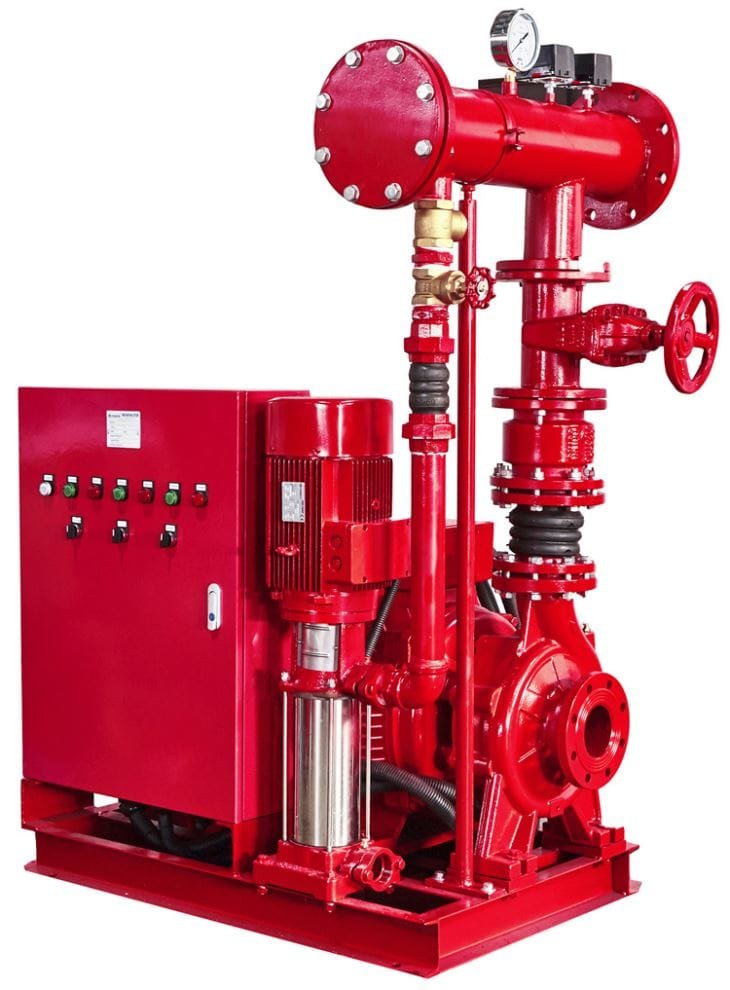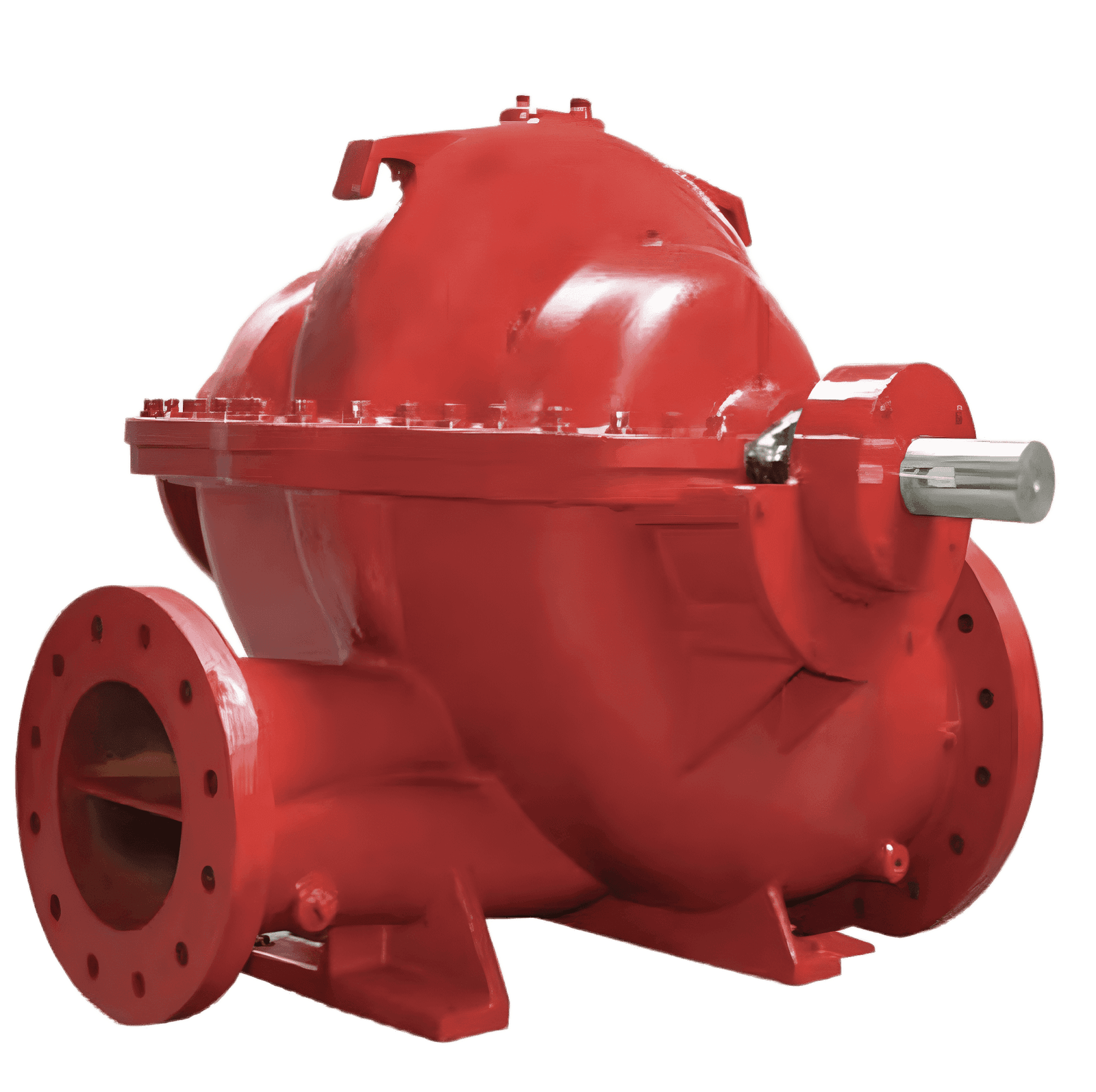
NFPA 20, the Standard for the Installation of Stationary Pumps for Fire Protection, sets requirements for selecting and installing fire pumps so that sprinkler, standpipe and hydrant systems get an adequate and reliable water supply in a fire. The current edition is 2025; on Saudi projects, the Saudi Fire Protection Code (SBC 801) and Civil Defense set the edition that applies.
Key takeaways
- NFPA 20 covers pump selection, installation and acceptance; periodic no-flow runs and the annual performance test after handover follow NFPA 25.
- NFPA 20 performance criteria call for 150% of rated flow at no less than 65% of rated pressure, with churn between 101% and 140% of rated pressure.
- Electric pumps need an alternate power source in high-rise buildings or where the normal source is not reliable, unless a permitted arrangement such as a backup diesel pump is used.
- The 2025 edition standardizes the term “jockey pump”, adds cybersecurity rules for automatic remote testing, and requires alternate power for electrically powered diesel pump room equipment where normal power is unreliable.
- Fire pumps fall under the Saudi Standards, Metrology and Quality Organization (SASO) technical regulation for fire control equipment, with a certificate of conformity handled through SABER.
What NFPA 20 covers
Published by the National Fire Protection Association (NFPA), the standard covers centrifugal pumps such as split-case and end-suction types, vertical turbine pumps and positive displacement pumps; their electric, diesel and steam turbine drivers; controllers; pump rooms; suction and discharge connections; jockey pumps; and acceptance testing.
NFPA 20 does not set the water demand itself: the required flow and pressure come from the hydraulic calculations for sprinklers and standpipes, as our NFPA 13 sprinkler standard guide explains. Electric pump supplies follow Article 695 of NFPA 70.
How NFPA 20 is organized
The chapters of the 2025 edition used most on projects:
| Chapter | What it covers |
|---|---|
| 4 | General requirements, including pump room protection (4.14) and jockey pumps (4.27) |
| 5 | Fire pumps for high-rise buildings |
| 6 | Centrifugal pumps |
| 7 | Vertical shaft turbine-type pumps |
| 8 | Positive displacement pumps |
| 9 | Electric drive and power sources, including alternate power (9.3) |
| 10 | Electric-drive controllers and accessories |
| 11 | Diesel engine drive, including fuel and power for pump room equipment |
| 12 | Engine drive controllers, including battery bank alternation and automatic remote testing |
| 13 | Steam turbine drive |
| 14 | Acceptance testing, including the field acceptance test in Section 14.2 |
Pump selection and performance
The pump is selected for the duty point: the flow and pressure from the approved hydraulic calculations. NFPA 20 performance criteria put churn (no-flow) pressure between 101% and 140% of rated pressure and call for 150% of rated flow at no less than 65% of rated pressure.
Pumps are usually listed to UL 448 or FM Approved to the FM standard for their type (for example FM 1311 for split-case and FM 1319 for end-suction pumps), so check the listing of the exact pump, driver and controller models supplied, as our UL listed vs FM approved guide explains.
| Component | Main NFPA 20 points |
|---|---|
| Pump | Duty point from hydraulic calculations; churn and 150% criteria |
| Electric driver | Alternate source for high-rise buildings or an unreliable supply (9.3); protected feeders under NFPA 70 |
| Diesel driver | Fuel for at least 12 hours at the published consumption rate, plus 5% for expansion and 5% for sump; two battery banks that the controller alternates weekly |
| Controller | Specific to the driver type; since 2025, automatic remote testing over a network only through an authorized user’s cybersecure connection |
| Jockey pump | Approved but not required to be listed; controller listed, but not necessarily for fire pump service; no alternate power required (4.27) |
| Pump room | Sprinklered: Extra Hazard Group 2 with a diesel driver or its fuel tank, Ordinary Hazard Group 1 for electric drivers |
Our electric vs diesel fire pumps comparison covers driver choice, and our fire pump room guide covers the room.
What changed in the 2025 edition
| Change | Where | What it means |
|---|---|---|
| “Jockey pump” as the standard term | Throughout | Replaces “pressure maintenance pump” and “make-up pump” |
| Packing seals, per committee revisions | Second Revisions SR-8 (6.1.1.5) and SR-9 (7.3.1.3) | The committee called for packing on centrifugal and vertical shaft turbine pumps over concerns that mechanical seals fail after long standby or with raw-water debris; listed pumps with mechanical seals exist, so confirm this rule in the published text |
| Automatic remote testing | Controller chapters, e.g. 12.7.2.8 | Over a network only via an authorized user’s cybersecure connection, with equipment evaluated for cybersecurity; locally wired systems are exempt from the evaluation |
| Pump room sprinklers | 4.14.1.3 | All pump rooms are sprinklered to NFPA 13; electric pump rooms previously needed sprinklers only in buildings required to be sprinklered |
| Alternate power rule | 9.3 | Two clauses merged: an alternate source where the normal source is not reliable or for high-rise buildings, unless a permitted arrangement is used |
| Diesel pump room services | 11.3.2 (new) | Alternate power for electrically operated ventilation and heaters where normal power is unreliable |
These changes and their section numbers come from the technical committee’s First and Second Revision documents for the 2025 cycle, not from the printed standard; confirm them in the published text.
How NFPA 20 applies on Saudi projects
SBC 801, Civil Defense and the project specification set the NFPA 20 edition that applies; the 2024 Saudi Building Code has been mandatory since 30 June 2025. Publication of NFPA 20 2025 does not make it mandatory automatically, so confirm the edition with the consultant before selecting the pump.
Fire-fighting pumps are within the scope of SASO’s Technical Regulation for Fire Control Materials and Equipment, which lists SASO NFPA 20 among its reference standards and requires a Type 3 certificate of conformity from a notified body or SASO, with conformity handled through the SABER platform.
Saudi summer heat reduces diesel engine output, so it is good practice to select the engine on derated output, design ventilation for peak conditions and confirm performance in the acceptance test.
Applying NFPA 20 on a project: step by step
- Take the duty point from the approved hydraulic calculations for sprinklers, standpipes and hydrants.
- Confirm the adopted edition, supply reliability and high-rise status with the consultant and Civil Defense.
- Choose the pump type for the water source and the driver arrangement: electric, diesel or both.
- Check the curve against the 150% and churn criteria, and the listing of the pump, driver and controller.
- Design the pump room: separation, sprinklers, ventilation, drainage, fuel tank and maintenance access.
- Size suction and discharge piping, control valves, relief valves and test arrangements.
- Plan the field acceptance test and the NFPA 25 program from the start.
Acceptance testing, maintenance and cost
Chapter 14 governs field acceptance. Suction and discharge piping is flushed and hydrostatically tested at not less than 13.8 bar (200 psi) or at 3.4 bar (50 psi) above the maximum pressure to be maintained in the system, whichever is greater. The pump is then tested at churn, 100% and 150% of rated flow against the certified shop test curve, with at least six automatic and six manual starts. Our fire pump acceptance testing guide covers the details.
After handover, NFPA 25, now in its 2026 edition, calls for weekly no-flow runs of diesel pumps, weekly or monthly runs of electric pumps and an annual flow performance test, as our NFPA 25 inspection, testing and maintenance guide explains. There is no typical price: cost follows pump type, size and listing route, the driver and alternate power arrangement, room, fuel and ventilation works, and lifetime testing and maintenance.
Common site mistakes
- Selecting a pump on flow alone, without the pressure and the 150% point.
- Treating a generator or utility feed as reliable without acceptance by the authority having jurisdiction (AHJ).
- Too little ventilation or an undersized exhaust in diesel pump rooms.
- Jockey pump settings that make the main pump start on minor leakage.
- No certified shop test curve, so the acceptance test has no baseline.
How AZEIDK helps
The AZEIDK fire fighting systems solution covers fire pumps and sprinkler networks, supply and installation, testing and commissioning, handover readiness and maintenance support. Our engineering design and calculations service sets the design criteria and prepares the required engineering calculations within the project scope, and annual maintenance contracts provide scheduled inspections and periodic functional tests of fire pumps, set by the contract scope.
Jack Pump, a brand specialized in stationary fire pumps supplied by AZEIDK, offers VES end-suction, MSC split-case and VTP vertical turbine series, and we recommend verifying each model’s UL or FM listing in its datasheet. This draws on 16+ years in the Saudi market.
FAQ
What does NFPA 20 cover?
It covers the selection, installation and acceptance of stationary fire pumps: pump types, electric and diesel drivers, controllers, pump rooms, suction and discharge connections, jockey pumps and the field acceptance test. It does not set the water demand itself and leaves maintenance to NFPA 25. The current edition is 2025, and a 2028 edition is in development.
Which NFPA 20 edition applies in Saudi Arabia?
The edition set through SBC 801, Civil Defense requirements and the project specification, not necessarily the latest. SASO’s technical regulation for fire control equipment also lists SASO NFPA 20, but that does not replace confirming the edition. Confirm it in writing with the consultant before selecting the pump, and state it in the specification and approval documents.
When does an electric fire pump need an alternate power source?
NFPA 20 requires an alternate source in high-rise buildings or where the AHJ does not accept the normal source as reliable, unless a permitted arrangement such as a backup diesel pump is used. Where a generator is the alternate source, check that it can start the pump motor with the other loads running.
What is a jockey pump, and does it need to be listed?
It is a small pump that makes up minor leakage and holds system pressure so the main pump does not start unnecessarily. Under Section 4.27 of the 2025 edition, it must be approved but need not be listed; its controller must be listed, but not necessarily for fire pump service; and it needs no alternate power.
What changed in NFPA 20 2025?
The edition standardizes the term “jockey pump”, adds cybersecurity rules for automatic remote testing, requires sprinklers in all pump rooms, and calls for alternate power for diesel pump room ventilation and heaters where normal power is unreliable. Committee revisions also call for packing seals on centrifugal and vertical turbine pumps; confirm that rule and the section numbers in the published text.
Does NFPA 20 cover fire pump maintenance?
No. After acceptance, periodic no-flow runs, the annual performance test and maintenance follow NFPA 25, now in its 2026 edition. NFPA 20 covers selection, installation and the acceptance test, whose signed results become the baseline for every later test, so keep them with the certified shop test curve.
Selecting a fire pump for your project? Send us your hydraulic calculations and power supply details, and our engineers will review the pump type, driver arrangement and acceptance requirements with you. Contact the AZEIDK team