Seafood processing plants and cold-storage warehouses combine wet processing halls, refrigeration plant, insulated panel rooms, packaging stores and high-rack warehouses, and most run around the clock. Fire safety starts with a hazard review of each area, then matches detection, suppression and water supply to it. The Naqua Shrimp Project in Al Lith illustrates the approach; there, AZEIDK’s work covered supply of fire protection, alarm and security systems; their supply, installation, testing and commissioning; and scheduled maintenance of the fire protection systems.
Key takeaways
- On an aquaculture site the fire risk sits in the buildings that keep production running: processing halls, cold stores, refrigeration plant, warehouses and electrical rooms.
- Freezers need dry sprinklers or preaction systems, and insulated panels and plastic packaging change the design.
- Ammonia refrigeration adds a gas that is toxic and flammable at about 15% to 28% in air, so leak detection, ventilation and shutdown should be coordinated with the fire alarm.
- Coastal salt air, humidity and daily wash-down speed up corrosion, so maintenance is part of readiness.
- Plan testing and shutdowns around production, because the site cannot simply stop.
In this article
The Naqua Shrimp Project at Al Lith
The National Aquaculture Group (NAQUA) runs the project at Al Lith on the Red Sea coast, about 180 km south of Jeddah; the group’s first projects date back to 1982. According to Saudipedia, the shrimp project includes 18 farms with 80 nurseries and 77 super-intensive ponds, water pumps with a capacity of up to about 150 m³ per second, and shrimp factories with a capacity of around 800 metric tons a day. In 2018 the group’s chief executive told Arab News it was one of the largest integrated marine farms in the world.
A site built around ponds may look far from fire risk, but production depends on buildings and plant: processing halls, freezers and cold stores, warehouses, refrigeration and electrical rooms, pumping stations and tanks. A fire in any of them can stop the whole chain from pond to export.
Where the fire risk sits in a seafood plant
| Area | Main fire hazards | Protection approach |
|---|---|---|
| Processing halls | Motors, conveyors and electrical panels in wet, humid areas; packaging materials at the lines | Sprinklers designed for the hazard; detection and devices suited to humidity and wash-down (good practice) |
| Freezers and cold stores | Insulated panels, some with combustible cores; water-filled pipes that freeze | Dry sprinklers or preaction systems, with cold-rated detection |
| Refrigeration machinery rooms | Where ammonia is the refrigerant: leaks of a gas that is toxic, and flammable within a defined concentration range | Ammonia detection, ventilation and shutdown to refrigeration safety standards, interfaced with the fire alarm |
| Packaging stores and high-rack warehouses | Cartons, plastic trays and pallets stored high | Sprinklers designed for storage height and commodity class |
| Electrical and control rooms | Panels running pumps, refrigeration and processing around the clock | Early detection, with gas suppression where water is unsuitable |
| Pumping stations, tanks and yards | Large outdoor areas that can be far from the nearest Civil Defense station | An external network of pipes, control valves and hydrants fed by dedicated fire pumps |
Our cold storage fire protection guide covers freezer sprinkler options and ice plugs, and our high-rack warehouse protection guide covers commodity class and early suppression fast response (ESFR) sprinklers, so this page does not repeat them. For electrical rooms, see our electrical room fire protection guide, and for the site network our fire hydrants and landing valves guide.
Ammonia refrigeration and the fire alarm
Where a plant uses ammonia refrigeration, the hazard goes beyond fire. The US Occupational Safety and Health Administration (OSHA) notes that ammonia is corrosive to the skin, eyes and lungs, that exposure to 300 parts per million is immediately dangerous to life and health, and that it is flammable at about 15% to 28% by volume in air and can explode in an enclosed space with an ignition source.
The refrigeration design follows its own standards, such as ANSI/IIAR 2 (2021 edition), which covers machinery rooms and ammonia detection and alarms. The fire protection designer’s job is to coordinate with it; good practice is to:
- Agree which ammonia alarms report to the fire alarm panel and what they trigger, such as ventilation, refrigeration shutdown or evacuation signals.
- Keep machinery rooms separate from processing halls and stores, and keep combustible storage out of them.
- Give emergency teams and Civil Defense a plan showing machinery rooms, isolation points and safe approach routes.
- Test the interfaces at commissioning and at every periodic test, not just the devices.
Designing protection for a site that never stops
- Good practice is to start with a zone-by-zone hazard review: products, packaging, storage height, room temperature, construction and occupancy.
- Base the design on the Saudi Fire Protection Code (SBC 801) and Civil Defense requirements, which set the editions of National Fire Protection Association (NFPA) standards that apply; insurers that apply FM Global data sheets may add their own criteria.
- Size the water supply and fire pumps for the most demanding area, often a high-rack warehouse or a freezer with a dry-pipe or double-interlock preaction system, for which NFPA 13 requires a 30% larger design area.
- On a remote coastal site, on-site systems need to detect and contain a fire before outside crews arrive, so detection and suppression coverage matter more than usual.
- Detect early in insulated panel buildings, where fire can travel inside walls and ceilings out of reach of the sprinklers.
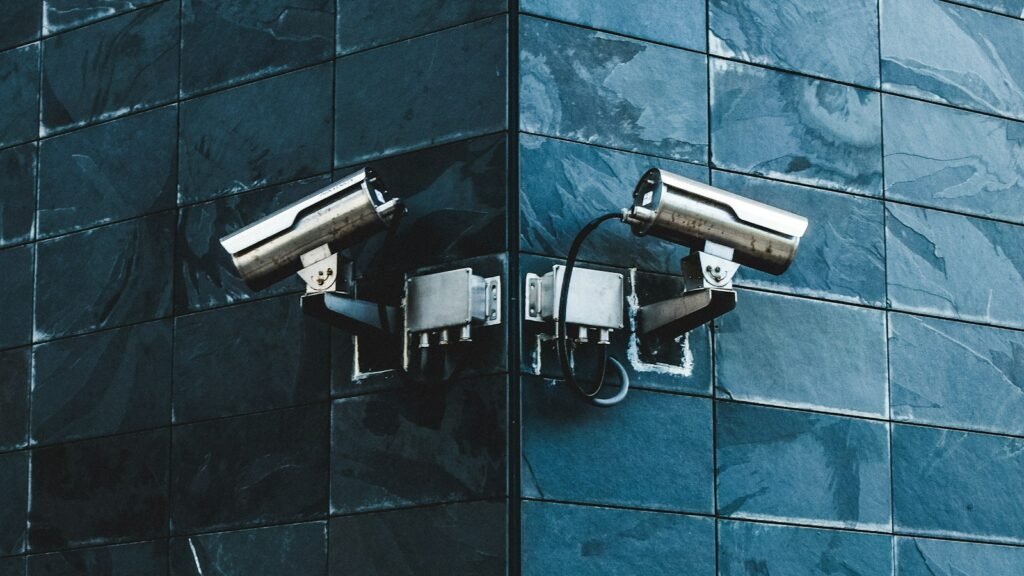
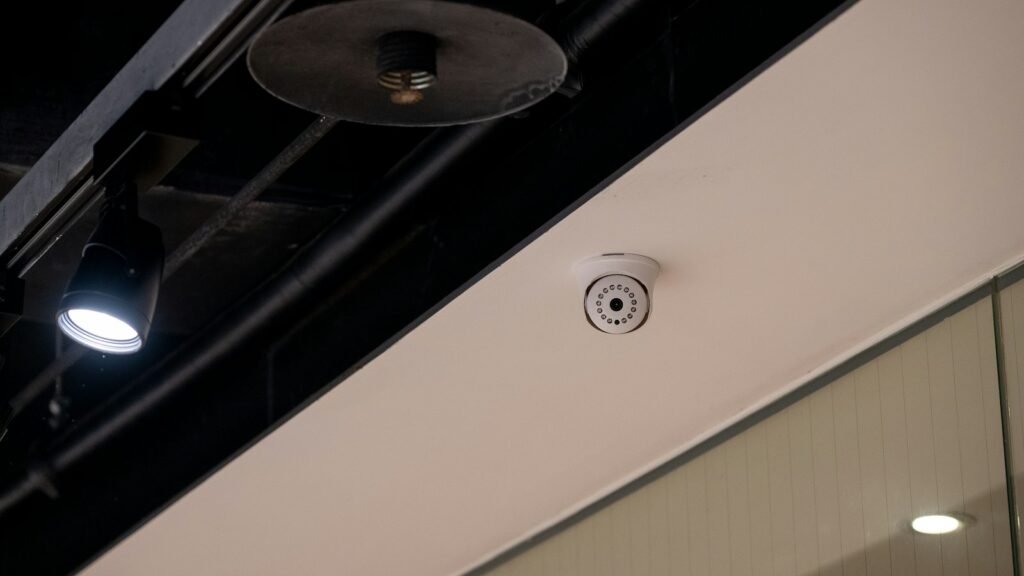
- Good practice is to integrate security and low-current systems: closed-circuit television (CCTV) on loading docks, perimeters and machinery rooms, and access control for plant rooms, help detect and limit incidents, as our security and surveillance systems solution provides.
Corrosion, humidity and wash-down
Salt-laden coastal air, high humidity and daily wash-down attack pipes, hangers, valves, sprinkler frames and device housings. Practical good practice:
- Specify materials and coatings suited to a corrosive coastal environment for exposed pipework and supports, within their approval or listing conditions.
- Choose detectors, manual call points, sounders and junction boxes with enclosure ratings suited to humid and wash-down areas.
- Keep sprinklers free of product residue and cleaning chemicals; NFPA 25 (2026 edition) calls for sprinklers in harsh environments to be tested or replaced every 5 years.
- Shorten visual inspection intervals in the most exposed areas and record how corrosion develops.
Testing and maintenance in 24/7 operations
Food plants rarely allow a full shutdown, so testing is planned zone by zone. Every section taken out of service for work is impaired under NFPA 25 and needs tags, notifications and interim measures, as our article on the risks of deferred fire system maintenance explains. A short checklist for seafood facilities:
- Hazard review done for each building, and updated when products, packaging or storage change.
- Freezer and cold store protection matched to room construction and temperature, with dried air or nitrogen for dry and preaction systems.
- Rack storage within the limits of the installed sprinklers.
- Where ammonia is used: ammonia detection and refrigeration interfaces tested with the fire alarm.
- Electrical and control rooms protected, with suppression systems in service.
- Hydrants, valves and fire pumps on the external network inspected and run on schedule.
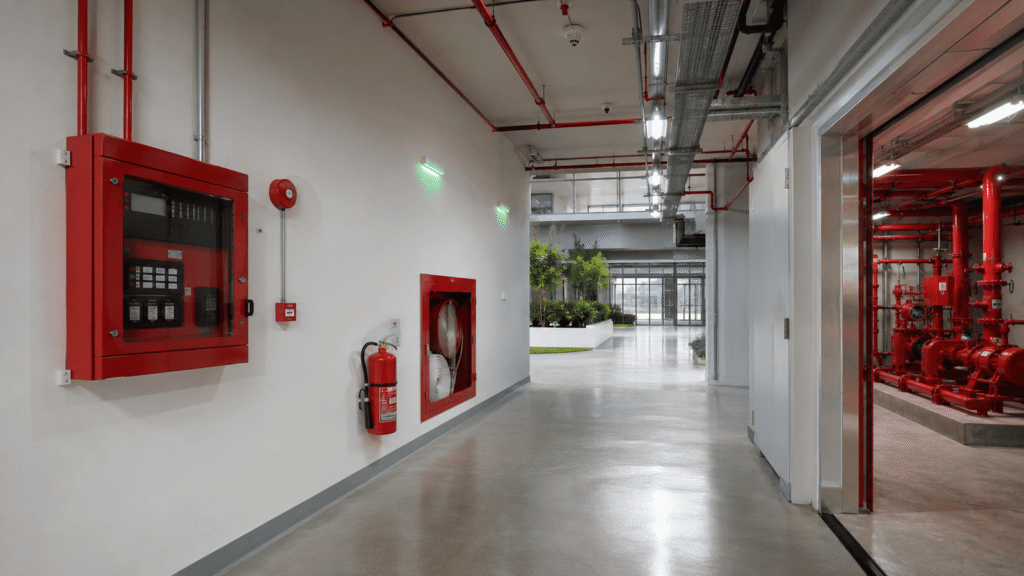
- Extinguishers and exit signs in place and unobstructed in every corridor and hall.
- Maintenance and test records ready for Civil Defense inspection and license renewal.
Common mistakes and what drives cost
- Treating a cold store as an ordinary warehouse and running wet pipe into freezing areas.
- Switching from cartons to plastic trays, or raising racks, without reviewing the sprinkler design.
- Ammonia alarms that sound locally but are not linked to the fire alarm or the emergency plan.
- Devices and pipework left to corrode in salt air and wash-down areas.
There is no typical cost. It depends on the number and size of buildings, room temperatures and construction, storage height and commodity, the water supply and pump capacity needed, the share of dry and preaction systems, gas suppression rooms, distances across the site, and working in a facility that cannot stop.
How AZEIDK helps
At the Naqua Shrimp Project in Al Lith, AZEIDK worked at three levels: supplying fire protection, alarm and security systems; supplying, installing, testing and commissioning them; and maintaining the fire protection systems on a schedule to keep them ready on a site that runs around the clock.
For similar food and cold-chain facilities, we work through our fire fighting systems and fire alarm systems solutions, with technical supply and annual maintenance contracts that provide scheduled inspections and periodic functional tests set by the contract scope. The brands within our supply scope are listed on our products page, and we bring 16+ years in the Saudi market and 17+ branches and service regions.
FAQ
What fire risks are specific to seafood warehouses?
They combine insulated panels, some with combustible cores, cardboard and plastic packaging stored high, refrigeration plant and electrical panels running continuously, and sometimes ammonia refrigeration. Water-filled pipes also freeze in freezers, so an ordinary wet system cannot be used there, and each area needs its own design.
Can sprinklers be used in seafood cold stores and freezers?
Yes, but not with wet pipe inside the freezing zone. Freezers use dry sprinklers fed from wet pipe in conditioned space, or dry-pipe or preaction systems with dried air or nitrogen, chosen by room construction and temperature. Our cold storage guide explains the options and how to prevent ice plugs.
Does ammonia refrigeration affect fire protection design?
Yes. Ammonia is toxic and, according to OSHA, flammable at about 15% to 28% by volume in air. Machinery rooms and ammonia detection follow refrigeration standards such as ANSI/IIAR 2, and it is good practice to link their alarms to the fire alarm and the emergency plan and to test that link periodically.
Which codes apply to fire safety in a Saudi food processing plant?
SBC 801 and Civil Defense requirements set the systems required and the NFPA editions that apply, such as NFPA 13 for sprinklers, NFPA 72 for fire alarm and NFPA 25 for maintenance. Insurers may add their own criteria, so collect every requirement in the design basis before starting.
What did AZEIDK do at the Naqua project?
According to the AZEIDK project page, the work at the NAQUA site in Al Lith covered supply of fire protection, alarm and security systems; their supply, installation, testing and commissioning; and scheduled maintenance of the fire protection systems to keep them ready on a site that runs around the clock. The page names no equipment brands.
How often do fire systems in a food plant need maintenance?
The applicable standards set the minimum, such as NFPA 25 for water-based systems, NFPA 72 for fire alarm and NFPA 10 for extinguishers, in the edition set by SBC 801 and Civil Defense. In humid coastal settings, it is good practice to inspect corrosion-prone areas more often and to plan tests zone by zone without stopping production.
Planning a food plant or cold store, or reviewing an existing one? Send us your drawings, storage arrangement and room temperatures, and our engineers will review the fire protection, alarm and security systems each area needs. Contact the AZEIDK team