


Al-Baha Launches 20 Thermal Camera Towers for Early Wildfire Detection (October 2026)
- News
- 5 min read
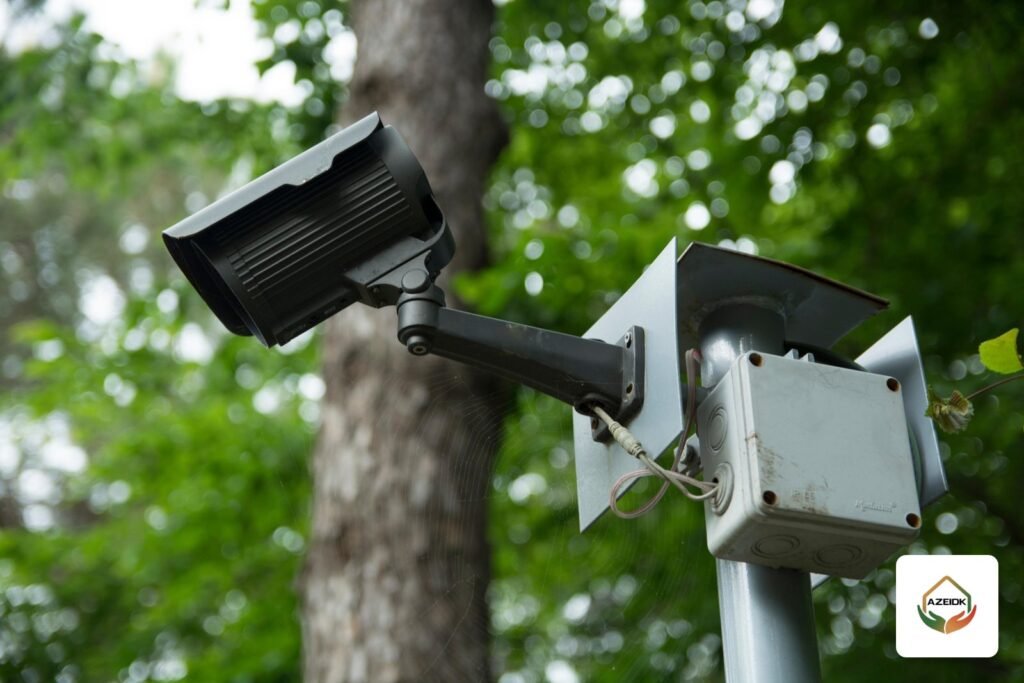
On 18 October 2026, HRH Prince Dr. Hussam bin Saud bin Abdulaziz, Emir of the Al-Baha Region, launched the region’s forest land monitoring system: a network of thermal camera towers for early wildfire detection, according to the Saudi Press Agency (SPA). The system has 20 towers fitted with thermal surveillance cameras linked to a central system, making Al-Baha the first fully completed model of this system in the Kingdom.
Key takeaways
- 20 thermal camera towers are operating in Al-Baha, linked to a central system, with the system’s maturity in the region reported by SPA at 100%.
- The towers are 20-metre, solar-powered steel structures. Their dual-sensor cameras detect smoke, heat signatures and hot spots.
- Data reaches data management centres in real time through an Enterprise GIS link.
- The project is part of an initiative to install 100 towers and thermal cameras across Al-Baha, Asir, Makkah, Jazan and Najran.
- The system was delivered by the Al-Baha branch of the National Center for Vegetation Cover Development and Combating Desertification, in support of Vision 2030 and the Saudi Green Initiative.
Al-Baha’s thermal camera towers: what was launched
At the launch, the Emir was briefed by Mohammed bin Saeed Al-Zahrani, Director General of the Center’s Al-Baha branch, and Fahd Miftah Al-Zahrani, Director General of the Ministry of Environment, Water and Agriculture branch in the region. The system operates under the national forest management system (NFIMS). Its stated purpose is a rapid response to fire outbreaks and pest threats and the protection of vegetation cover.
According to SPA’s report of 18 October 2026, carried again on 19 October, the towers are 20 m steel structures running on solar power, fitted with dual-sensor thermal cameras that can detect smoke and heat signatures and locate hot spots. The network is tied into Enterprise GIS to feed real-time data to data management centres and speed up response and decisions. SPA described Al-Baha as the first complete model of the tower and thermal camera system in the Kingdom.
How does a thermal camera spot a fire early?
A thermal camera does not rely on visible light. It captures the infrared radiation every object emits according to its temperature and turns it into an image of temperature differences, so it works day and night without lighting. When a spot in the field of view is clearly hotter than its surroundings, analytics can flag it and send an alert to the control room.
A dual-sensor camera combines a thermal sensor and a visible-light sensor in one housing. The operator sees the thermal image that picked up the hot spot next to a normal image that helps judge the situation before dispatching crews. Tower height extends the view over trees and terrain, and solar power solves the supply problem at sites far from the grid. The real value comes from the central link: with GIS, an alert arrives with coordinates, so responders know where to go.
What does this mean for the Saudi market?
This is a government forestry project, but it reflects a clear trend in the Kingdom: smart thermal monitoring is now used as an early warning tool across large open areas, not only as a camera that records what happened. That matters to owners of large outdoor sites such as big farms, mountain resorts, parks, industrial compounds, solar plants and open storage yards.
These sites face the same questions the Al-Baha project answered: where and how high to mount cameras to cover the area without blind spots, how to bring power and network to remote edges, and who receives an alert and how they locate it. We covered part of this in our article on thermal perimeter protection for solar plants and remote sites and in AI CCTV cameras and fewer false alarms.
AZEIDK Expert Take
If you own a large outdoor site and are considering thermal monitoring, start with three practical steps. First, define the goal: perimeter intrusion, early warning of hot spots, or both, because camera choice and mounting angle differ for each. Second, ask for a technical site survey before buying, covering pole heights, network routes and power at the far edges. Third, plan from day one for integration with a central management system, and decide who receives alerts and what they do next. Keep in mind that a thermal camera on an open site is a supporting monitoring tool; it does not replace the fire alarm system required inside buildings under the Saudi Fire Protection Code SBC 801. See AZEIDK GROUP’s security and surveillance solutions and CCTV systems, or contact our team to discuss your site.
Sources
- Al-Baha Emir launches the region’s forest land monitoring system, Al-Madina citing the Saudi Press Agency (SPA), 18 October 2026
- Al-Baha, first complete model of thermal monitoring towers to protect vegetation cover, Ahwal citing the Saudi Press Agency (SPA), 19 October 2026
- Al-Baha Emir launches the region’s forest land monitoring system, Al-Jazirah, 18 October 2026
Related guides
- Civil Defense Updates the Fire Safety Officer Regulation (January 2026)
- UL/FM Fire Pumps: The Heart of the Water-Based Fire Network
- Saudi Arabia’s New Government Procurement Law: What It Means for Fire and Security Contractors
- Counterfeit Fire Sprinklers with Unauthorized UL Marks: UL Solutions Warning on Model TY9226 and What It Means for Saudi Projects

