


Hikvision NVR and DVR Vulnerability CVE-2025-66177 (January 2026): A Risk From Inside the Local Network
- News
- 3 min read
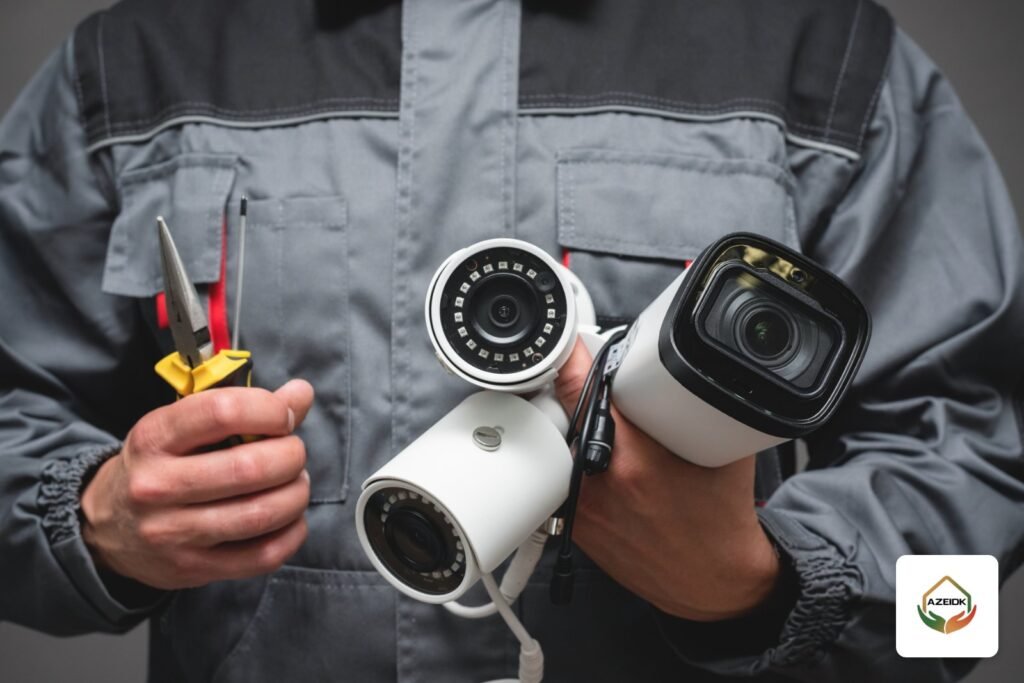
2026 opened with a Hikvision advisory aimed at video recorders. On 12 January 2026 the Hikvision Security Response Center (HSRC) published HSRC-202601-01 on CVE-2025-66177, a flaw in the device search and discovery feature of some NVR, DVR, CVR and IPC models, scored 8.8 under CVSS v3.1. The same day, the national CERT of Saudi Arabia’s National Cybersecurity Authority (NCA) issued high-severity alert 2026-7166.
Key points
- CVE-2025-66177: a stack overflow in the search and discovery feature that lets an attacker on the same local network make the device malfunction with crafted packets.
- Score 8.8. No credentials are needed, but the attacker must be inside the local network.
- Affected: parts of the NVR, DVR, CVR and IPC series; the exact model list is linked from the advisory.
- The same advisory covered a similar flaw, CVE-2025-66176, in some Hikvision access control devices.
What “from the local network” really means
The vector (AV:A) means the flaw cannot be exploited straight from the internet; the attacker needs a foothold on the same local network as the recorder. That sounds reassuring, but it exposes a common weakness: in many shops, offices and compounds the cameras and recorder share one network with staff, guests and public Wi-Fi. In that setup, one infected laptop or a connected visitor is enough to reach the recorder.
Practical steps
First, find the recorder model and firmware version in the device interface or with the SADP tool, and check it against the model list Hikvision links from the advisory. Second, download the update from Hikvision’s official website and install it, after backing up the configuration. Third, and most important in the long run, separate the CCTV network from the rest of the facility, using a dedicated switch or a separate VLAN, so that only those who need it can reach it.
What it means for facilities in Saudi Arabia
The recorder is the heart of a CCTV system; if it fails, every camera connected to it stops recording. The NCA alert is clear on the action: review the vendor advisory and update the affected products. Facilities subject to CCTV operating and footage retention requirements have one more reason to make sure their recorder is current and runs without interruption.
AZEIDK view
When you update, review the whole recorder configuration, not just the firmware; the steps are in Hikvision NVR settings, SADP and recording schedule. If you are comparing recorders before buying, see Hikvision vs Dahua NVR comparison, and for the Hikvision range we supply see Hikvision cameras in Saudi Arabia. General hardening is in how to protect CCTV cameras from hacking. Updates and network separation can be handled as part of CCTV maintenance and our annual maintenance contracts, or you can contact the AZEIDK team.
Sources
- Buffer Overflow Vulnerabilities in Some Hikvision Products (HSRC-202601-01), Hikvision, 12 January 2026
- Hikvision Alert 2026-7166, National Cybersecurity Authority CERT, 12 January 2026
AZEIDK provides CCTV camera installation, supply and maintenance for homes and facilities in Saudi Arabia.
Related guides
- Personal Protective Equipment at Work: The Last Line of Defense
- Intersec Dubai 2027 Adopts a Five-Domain Structure with a Dedicated Fire and Rescue Domain
- Hikvision Launches Hik-Connect 7 with HIKO AI: Plain-Language Search and Smart Alerts, No New Hardware
- Jeddah Tower Reaches Floor 121: What Supertall Towers Mean for Fire Safety

