Installation ends when the last pipe and detector are in place. The project ends only when every system proves it works as designed. Fire system commissioning and acceptance is therefore a stage in its own right: witnessed, documented tests against clear criteria, and a handover file that stays with the system.
This guide sets out the test sequence for fire alarm, sprinklers, standpipes, pumps and special suppression, the handover documents, and what must be ready before the civil protection inspection. It is the stage covered by the testing, commissioning and handover service within AZEIDK Egypt services.
Key takeaways
- Acceptance proves the system matches the approved drawings and performs. Looking right is not enough.
- NFPA 72 requires an acceptance test of every new fire alarm system covering all devices and interfaced functions, recorded in the Record of Completion.
- Under NFPA 13, sprinkler piping is hydrostatically tested at 200 psi for 2 hours, or at 50 psi above working pressure where that pressure exceeds 150 psi.
- Clean agent rooms need an enclosure integrity test; kitchen systems follow the manufacturer’s manual.
- The handover file is part of the system: as-builts, test certificates, programming, O&M manuals.
In this article
- What is legally required, and what is the technical reference?
- Fire system commissioning stages, from installation to handover
- Fire alarm acceptance tests to NFPA 72
- Sprinklers and standpipes: flushing and hydrostatic testing
- Fire pumps: acceptance test in brief
- Clean agent and kitchen suppression systems
- Documents handed over with the system
- The civil protection inspection before occupancy
- Common mistakes in fire system acceptance
- How AZEIDK Egypt supports testing, commissioning and handover
- Frequently asked questions
- Conclusion
What is legally required, and what is the technical reference?
In Egypt, Egyptian Building Law No. 119 of 2008 and its executive regulations require the permit applicant to apply fire protection requirements according to the Egyptian code. The current code is the Egyptian Code for the Design and Implementation of Fire Protection for Buildings — 2026 edition (Ministerial Decree No. 355 of 2026). The General Directorate of Civil Protection (Ministry of Interior) approves the drawings and inspects before occupancy, through its governorate departments.
Test procedures and acceptance criteria usually come from the standards in the project specification (NFPA 72, NFPA 13, NFPA 14, NFPA 20) and the manufacturer’s instructions. These standards are not legally binding in Egypt on their own; they become contractually binding when the specification calls for them. So start by confirming which reference the contract adopts.
Fire system commissioning stages, from installation to handover
Plan acceptance before installation ends: some tests must happen before ceilings are closed. The usual sequence:
| Stage | What happens | Output |
|---|---|---|
| Pre-test | Check against approved drawings and submittals; visual inspection | Snag list and close-out |
| Water-based network tests | Flushing, hydrostatic test, air test for dry systems | Signed test certificates for each section |
| Equipment tests | Pump and controller acceptance; alarm valve and main drain tests | Test reports with readings |
| Alarm and integration tests | Every device and circuit, cause-and-effect matrix, interfaces | Record of Completion and programming report |
| Witnessed system test | Real scenarios on the complete system | Provisional acceptance certificate |
| Handover | Hand over documents and train the operations team | Handover file and training record |
Fire alarm acceptance tests to NFPA 72
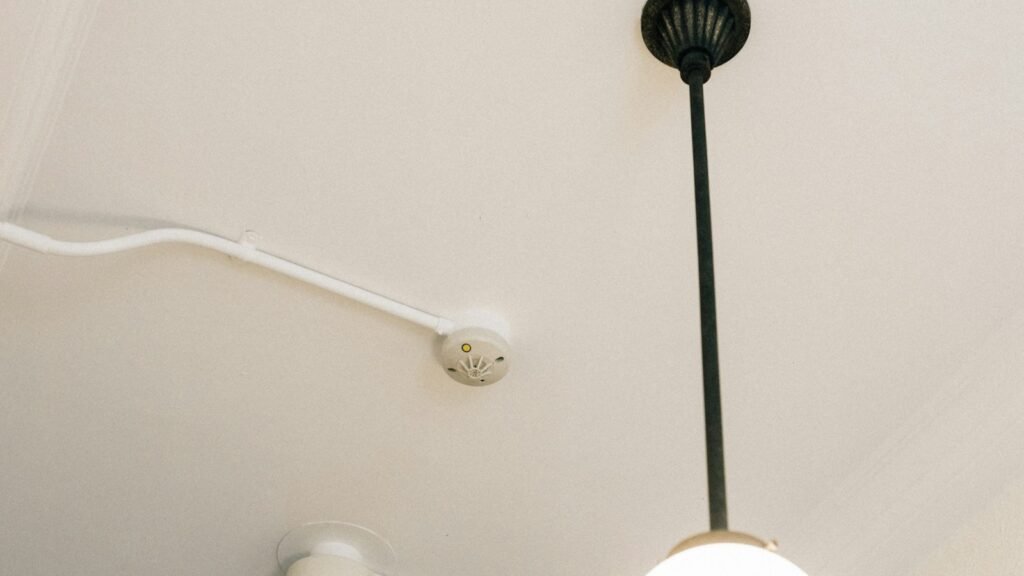
Chapter 14 of NFPA 72 (Inspection, Testing and Maintenance) covers acceptance testing of new systems. It is a full functional test, not a sample: every detector, manual call point (MCP), sounder, beacon and I/O module is operated and its signal confirmed at the panel. Interfaced functions such as HVAC shutdown, elevator recall and door release are tested too.
What to check during the test
- Addressable panels show the correct device type, number and location, matching the drawings.
- Smoke detectors are tested in place with smoke or listed aerosol, heat detectors with a heat source, per the manufacturer.
- Trouble signals: open a circuit wire; remove mains power and confirm transfer to batteries with a trouble signal.
- Sounder levels in each space against ambient noise.
- Supervisory signals from flow switches, valve tamper switches and the pump controller.
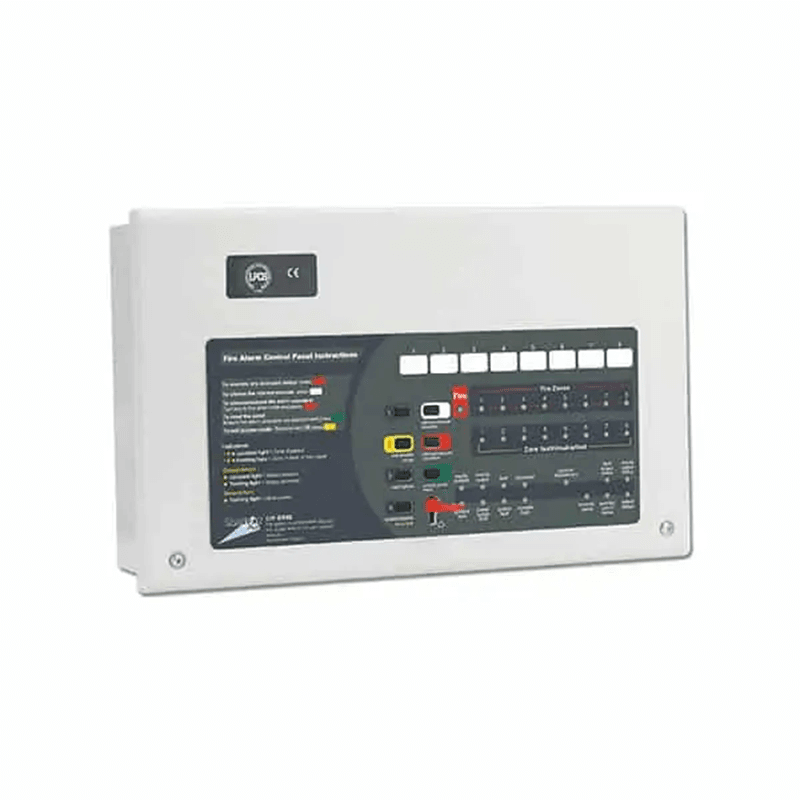
The stage ends with a signed Record of Completion, kept at the panel or another approved location. Later changes to devices, wiring or programming need a retest of the affected parts and an updated record. For Context Plus and TANDA panels and detectors, see our fire detection and alarm solutions.
Sprinklers and standpipes: flushing and hydrostatic testing
Piping is flushed before any pressure test. NFPA 14 refers underground flushing to NFPA 24 and requires the pipe between the fire department connection (FDC) and its check valve to be flushed before the FDC is fitted. Flushing velocity follows the specified standard.
The hydrostatic test follows. Values below are attributed to NFPA 13 (2022 edition, Chapter 29) and NFPA 14, as reported by US fire authorities and specialist sources; confirm them against your specified edition:
| Test | Pressure and duration | Acceptance criterion |
|---|---|---|
| Sprinkler system hydrostatic test (NFPA 13) | 200 psi (about 13.8 bar) for 2 hours, or 50 psi above working pressure where it exceeds 150 psi | No gauge pressure loss and no visible leakage |
| Standpipe and FDC piping hydrostatic test (NFPA 14) | 200 psi for 2 hours, or 50 psi above maximum pressure where it exceeds 150 psi | No leakage in aboveground piping |
| Dry system air test (NFPA 13) | 40 psi (about 2.8 bar) for 24 hours, in addition to the hydrostatic test | Correct any leak causing a loss above 1.5 psi |
| Modification to an existing system (NFPA 13) | At working pressure; where more than 20 sprinklers are affected, isolate the new portion and test at 200 psi for 2 hours | As for the original test |
Test pressure is read at the lowest elevation of the system or zone.
Functional tests after the pressure test
- Standpipe flow test: NFPA 14 acceptance includes a flow test at the hydraulically most remote outlet to confirm that flow and pressure match the design.
- Main drain: open until pressure stabilises; record static and residual pressure as the maintenance baseline.
- Alarm valve stations: open the inspector’s test connection; confirm the pressure or flow switch, water motor gong and panel signal. Operate control valves through their full range.
- Pressure-reducing valves: flow test them to confirm the setting, and record inlet and outlet pressures.
- FDC (siamese connection): threads must match local civil protection couplings.
Results go on the Contractor’s Material and Test Certificate. For network components and valves, see our fire fighting solutions.
Fire pumps: acceptance test in brief
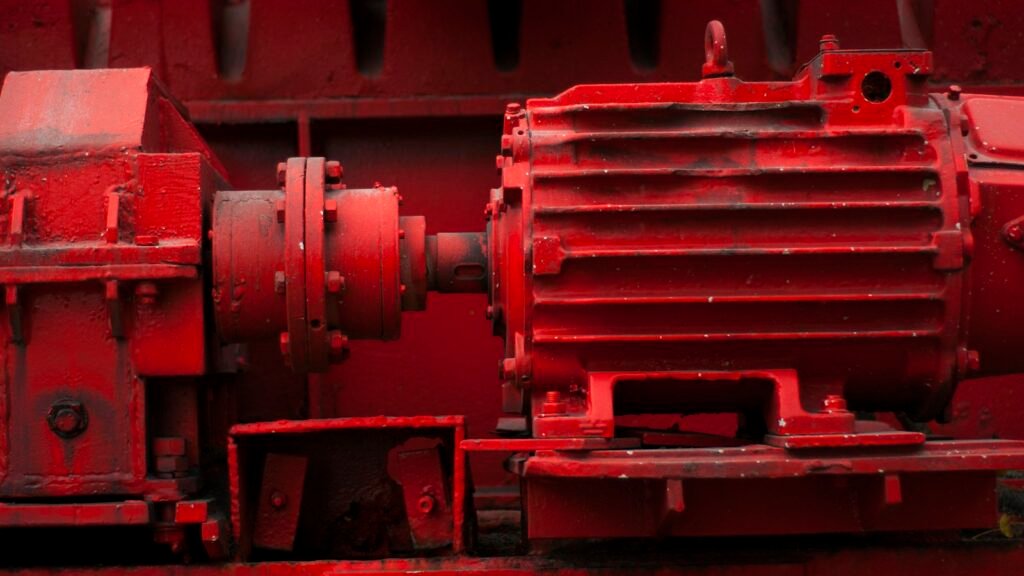
The NFPA 20 field acceptance test measures at least three points, churn (shutoff), 100% and 150% of rated flow, against the manufacturer’s certified curve. It also covers automatic and manual starts, the controllers, power supplies and diesel starting batteries. Details are in our guide to fire pump testing in Egypt.
The pump test comes after suction flushing and network testing, and jockey and main pump start/stop pressures are set and recorded. AZEIDK Egypt supplies 3PUMP fire pump sets (electric main, diesel standby and jockey pump with controllers on a common base). Sets supplied in Egypt are Non-UL (non-listed); UL/FM versions on request.
Clean agent and kitchen suppression systems
Clean agent systems
The room is part of a clean agent system: unsealed openings let the agent leak out. Acceptance therefore includes a door fan enclosure integrity test that measures leakage area and calculates retention time. As summarised by ORR Protection, the NFPA 2001 aim is to keep at least 85% of the adjusted minimum design concentration at the highest level of combustibles for at least 10 minutes. The sequence (alarms, pre-discharge delay, abort switch, HVAC shutdown where designed) is checked without discharge unless specified.
Kitchen suppression systems
Kitchen systems are tested to the manufacturer’s manual. On the HoodSafer system supplied by AZEIDK Egypt, checks cover automatic operation on heat, manual operation from the pull station, gas shut-off valve closure, and flow points matching the selected model (HS-4, HS-8 or HS-16) and the nozzle layout.
Documents handed over with the system
Operators, maintenance contractors and authorities will rely on this file for years. The usual minimum:
- As-built drawings for each system, showing circuit numbers, device addresses and valve locations.
- The fire alarm Record of Completion, programming report, cause-and-effect matrix and an electronic copy of the panel program.
- Hydrostatic, air and flushing certificates for each section, signed by contractor and consultant.
- The fire pump acceptance test report and the manufacturer’s certified curve.
- The clean agent enclosure integrity test report and agent quantity calculations.
- Datasheets and certificates from the approved submittal, plus O&M manuals.
- The operations team training record and the list of spare parts handed over.
Acceptance results are the baseline for NFPA 25 maintenance tests.
The civil protection inspection before occupancy
The civil protection inspection follows the internal tests. The project should show that installed systems match the approved drawings and work. Procedures and documents vary by building type and governorate, so confirm them with the competent civil protection department and the consultant. Go to inspection with every system tested, certificates ready and any deviation documented and approved.
Common mistakes in fire system acceptance
- Closing ceilings before concealed piping is pressure tested.
- Testing a sample of detectors, or accepting the panel signal without checking interfaced outputs.
- Installing detectors during finishing works, so dust fouls them before handover.
- Testing pumps before suction flushing, or without calibrated instruments.
- Skipping the enclosure integrity test, or altering the room afterwards without retesting.
- Handing over design drawings instead of true as-built drawings.
How AZEIDK Egypt supports testing, commissioning and handover
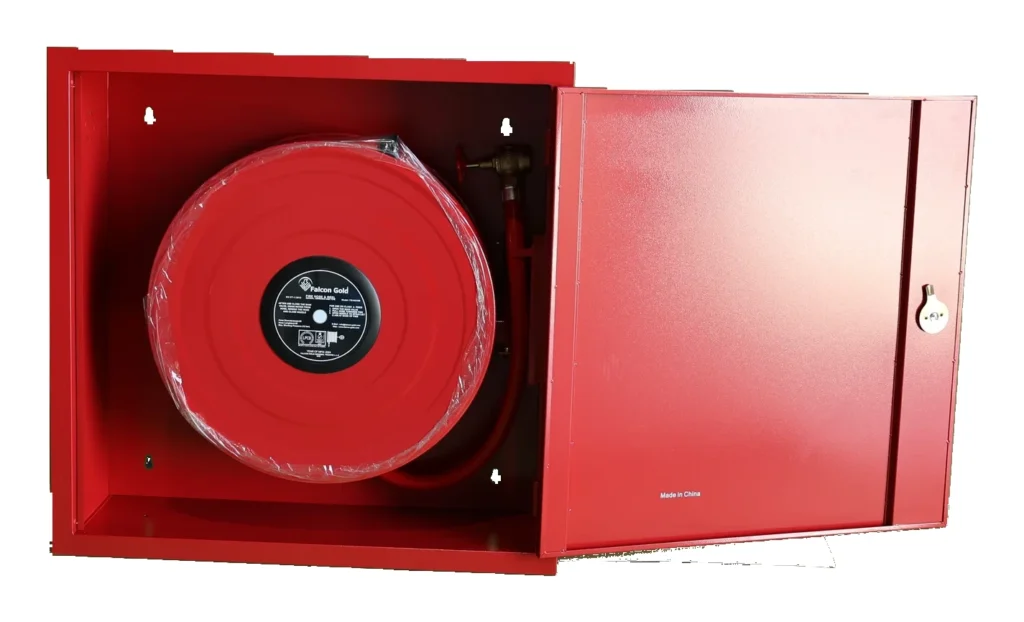
The AZEIDK Egypt service covers fire pump performance tests, network pressure tests, detector, panel and scenario tests, then handover with documents and operator training. Brands AZEIDK Egypt supplies for these systems: Context Plus and TANDA (alarm), 3PUMP (pumps), American Fire Control (valves), Falcon Gold (hose cabinets) and HoodSafer (kitchens).
Frequently asked questions
What is the difference between commissioning and acceptance?
Commissioning sets up and tests systems until they work as designed. Acceptance demonstrates this to the consultant and owner and formally accepts the results with the handover file.
How long is the hydrostatic test for a sprinkler system?
Under NFPA 13, 2 hours at 200 psi, or 50 psi above working pressure where it exceeds 150 psi, with no loss or visible leakage.
Must every detector be tested at acceptance?
Yes. The NFPA 72 acceptance test covers all initiating devices, notification appliances and interfaced functions. Sampling applies only to some retests after programming changes.
Do we need to discharge the clean agent at acceptance?
Not usually. A door fan integrity test and a sequence test without discharge are normal, unless the specification says otherwise.
When should we request the civil protection inspection?
Once internal tests are complete and certificates and as-built drawings are ready, after agreeing the required documents with the competent civil protection department.
Conclusion
Fire system commissioning and acceptance is a chain: flushing and pressure tests, pump acceptance, a full test of every alarm device and interface, a clean agent room integrity test, then a complete handover file. A missing link shows up later, at inspection or at the first fire.
Getting close to handover? Send us the systems in scope and your specified standard, and we will plan the test programme and handover document list with you. Talk to the AZEIDK Egypt team