Fire pipes for water-based networks in Saudi Arabia are usually black or galvanized carbon steel, electric-resistance welded (ERW) or SMLS (no weld seam), in Schedule 10 or Schedule 40. The pipe type, wall thickness and joining method (grooved, threaded or welded) are set by the approved design, and listed CPVC is used within light hazard limits in wet systems.
This guide takes the buyer’s and site engineer’s view: how to read a pipe specification, how to write it in a purchase request, and what to check when the shipment arrives. For design principles, hangers, microbiologically influenced corrosion and hydrostatic testing, see Fire Protection Piping and Fittings: Selection and Installation Guide. The reference frame on Saudi projects is the Saudi Fire Protection Code (SBC 801) and the NFPA standards the designer adopts, including NFPA 13 for sprinklers.
Key points
- Common reference specifications: ASTM A795 for fire protection pipe, ASTM A53 for general pipe in Schedule 40, and ASTM A135 for light-wall welded pipe.
- Schedule 40 accepts threading; Schedule 10 is joined with roll-grooved couplings or welding.
- Galvanized is not always better; the choice follows the system type and the listing scope.
- CPVC is for light hazard and residential use in indoor wet systems only.
- Write in the request: specification and grade, manufacturing method, schedule, ends, finish and approval, then check all of it at delivery.
In this article
- What types of black steel fire pipes are there?
- What is the difference between Schedule 40 and Schedule 10?
- Galvanized or black: which should you choose?
- Grooved, threaded or welded joints?
- Are fire pipes painted red?
- When is CPVC pipe suitable?
- How do you specify fire pipes in a purchase request?
- What do you check when pipes are delivered to site?
- What are the common mistakes when buying fire pipes?
- Frequently asked questions
- Summary
What types of black steel fire pipes are there?
“Black steel” means carbon steel pipe without a zinc coating, usually delivered with a temporary protective coat or a primer. By manufacturing method it splits into:
- Electric-resistance welded (ERW): formed from steel strip with a longitudinal welded seam. The most widely used in sprinkler and hose cabinet networks.
- SMLS (no weld seam): drawn from a solid billet with no seam. Usually ordered when the project specification calls for it.
The specifications you will see on the datasheet: ASTM A795, written for fire protection pipe, allowing welded and SMLS (no weld seam), black and galvanized. ASTM A53, a general specification of which Schedule 40 is used in fire service, distinguishing Type E (electric-resistance welded), Type S (SMLS (no weld seam)) and Type F (furnace-butt welded). And ASTM A135 for light-wall ERW pipe.
A practical example from AZEIDK’s site: KDI pipes are ERW, Schedule 10 to ASTM A795 Grade A or B and Schedule 40 to ASTM A53 Grade A or B, with UL 852 listing and FM Class 1630 approval, in sizes up to 6 inches according to the product page.
What is the difference between Schedule 40 and Schedule 10?
The schedule number indicates wall thickness for each diameter. Schedule 40 is thicker; Schedule 10 is lighter with a thinner wall. The practical difference is in joining:
- Threading removes part of the wall, so NFPA 13 limits it to Schedule 40 or heavier, unless the lighter pipe is listed by a testing laboratory for threading.
- Schedule 10 is usually joined with roll-grooved couplings or by welding.
- Schedule 40 accepts threading, roll grooving, cut grooving and welding.
Schedule 10 is not “second grade”; it is a listed pipe used within its listing. But the allowable working pressure varies with size and joining method; the KDI page, for example, states that the FM approval for Schedule 40 goes up to 300 PSI depending on size and installation method. So check the datasheet pressure against the maximum pressure in the network, including pump shut-off pressure.
Galvanized or black: which should you choose?
In wet systems that are always full of water, black steel is widely used, because stagnant water uses up its dissolved oxygen over time and corrosion slows. In dry and pre-action systems, where air and moisture enter, galvanized pipe is often specified. The KDI page states that dry systems are covered only by the galvanized type within its FM approval scope.
But galvanizing is not a cure-all: residual water at low points attacks the zinc and then the steel, and good drainage matters more than the finish alone, as the piping guide linked above explains. On site, welding galvanized pipe destroys the zinc layer at the weld, so it is handled according to the project specification and the manufacturer’s instructions.
Grooved, threaded or welded joints?
| Joining method | Common use | Suitable wall | What to check |
|---|---|---|---|
| Grooved couplings | Mains, branch lines and risers | Schedule 10 roll grooved; Schedule 40 roll or cut grooved | Coupling approval (UL 213 for rubber-gasketed fittings), groove dimensions per the manufacturer’s manual, rigid or flexible coupling |
| Threaded | Small sizes and sprinkler drops | Schedule 40 or pipe listed for threading | Clean threads, thread engagement and suitable sealant |
| Welded | Large diameters and shop fabrication | Per project specification and listing | Removal of cut-out discs from inside the pipe, approved welding procedures |
| Flanged | Pump rooms and large valves | Per pressure and size | Flange rating matching the valve and pump |
Grooved couplings are the most common on large projects because they install fast and come apart easily for maintenance, but their quality depends on the accuracy of the groove itself. A groove deeper or shallower than the manufacturer’s dimensions can cause leaks or separation under pressure. For valve and coupling brands available in the market, see Sprinkler, Valve and Grooved Fitting Brands in Saudi Arabia.
Are fire pipes painted red?
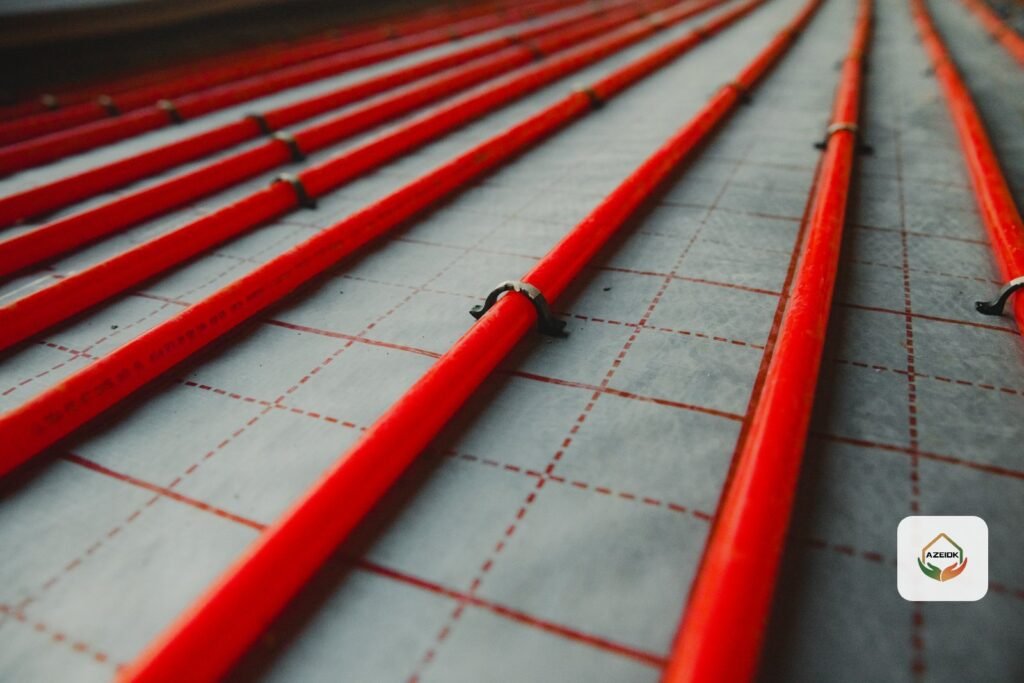
On most projects exposed fire pipes are painted red to distinguish them from water and HVAC pipes, but the colour, paint system and number of coats are set by the project specification and the consultant. When painting, keep three points in mind:
- Do not paint the sprinklers; NFPA 13 does not allow sprinklers to be coated except by the manufacturer, and a painted sprinkler found during periodic inspection is replaced.
- Do not paint inside grooves or over coupling gaskets contrary to the coupling manufacturer’s instructions.
- Specify a suitable primer for black pipe before installation if it will be stored or installed in a humid environment.
When is CPVC pipe suitable?
CPVC is a listed alternative to steel within narrow limits. The published datasheet for Viking CPVC pipe (BlazeMaster) states UL listing to UL 1821 for light hazard use under NFPA 13 and for residential buildings under NFPA 13R and NFPA 13D, with these restrictions:
- Wet systems only; never with compressed air or gases.
- Indoor use only; not listed for outdoor installation.
- Working pressure 175 PSI at 66 °C, with a maximum ambient temperature of 66 °C.
- FM approval limited to wet systems in light hazard occupancies.
In practice, CPVC suits light hazard apartments, hotels and offices, not warehouses or ceiling spaces exposed to high heat. Check the hazard classification first in the automatic sprinkler systems guide.
How do you specify fire pipes in a purchase request?
A bill-of-quantities line reading “4-inch fire pipe” is not enough to compare quotations. Write the specification with these items:
- Specification and grade: e.g. ASTM A795 Grade B, or ASTM A53 Type E Grade B.
- Manufacturing method: ERW or SMLS (no weld seam).
- Schedule: 10 or 40 for each size.
- Ends: plain, bevelled for welding, grooved, or threaded and coupled.
- Finish: black, hot-dip galvanized, or primed.
- Approval: UL, FM or both, with certificate numbers.
- Documents: datasheet, mill certificate and certificate of origin.
These documents go into the submittal the consultant approves before supply, as described in Fire Protection Shop Drawings.
What do you check when pipes are delivered to site?
- Markings printed on the pipe: manufacturer, specification, schedule, size and the UL or FM mark; the KDI page asks buyers to check the mark at delivery.
- Certificates matching the shipment: heat or batch numbers on the mill certificate match those printed on the pipes.
- Ends: intact grooves and threads, and protective caps in place.
- Condition: no dents, advanced rust or damaged galvanizing.
- Storage: off the ground, covered, and separated by size and schedule.
What are the common mistakes when buying fire pipes?
- Comparing quotations by price per tonne only: two offers at the same price may differ in schedule, finish or approval, so their real value differs.
- Mixing Schedule 10 and 40 on one site without marking: a light-wall pipe gets threaded by mistake, or groove dimensions that do not suit the wall are used.
- Accepting a general factory certificate: instead of checking that the required size and schedule are within the listing or approval scope.
- Ordering galvanized for the whole system without need: or ordering black for a dry system whose approval requires the galvanized type.
- Delaying submittal approval: pipes arrive before the consultant approves them and may be rejected after supply.
All of these mistakes can be caught on paper before shipment if the request specification is reviewed against the drawings and the bill of quantities.
Frequently asked questions
What are the best fire pipes?
There is no single best pipe. The right one matches the design, pressure and joining method, and carries a valid listing or approval.
Can Schedule 10 be threaded?
Generally no. NFPA 13 limits threading to Schedule 40 or heavier, unless the lighter pipe is listed for it.
What is the difference between ERW and SMLS (no weld seam)?
ERW has a longitudinal electric-resistance weld and is the most widely used; SMLS (no weld seam) is drawn with no seam and is usually ordered when the specification calls for it.
Is CPVC suitable for warehouses?
Usually not. Its listing covers light hazard and residential use in indoor wet systems only.
Is red pipe colour mandatory?
The colour is set by the project specification and the consultant. Red is the common choice for identification, and the sprinklers themselves are never painted.
Summary
Choosing fire pipes starts with the system type and the design pressure, then the schedule, joining method and finish, then the approval and documents. A buyer who writes these items into the request and checks them at delivery avoids most causes of material rejection on site.
Preparing the pipe and fittings bill of quantities for your project? Send us the drawings and the bill of quantities, and we will recommend suitable pipes and fittings with datasheets and approval documents for the submittal. Technical supply service or contact the AZEIDK team
Related guides
- Fire Hydrants and Landing Valves: Selection and Maintenance
- How to Evaluate a Fire Protection Contractor in Saudi Arabia Before Signing
- Fire Alarm Cable (Fire Alarm Wire): Types, Sizes and What the Consultant Asks Before Supply
- Conventional vs Addressable Fire Alarm Systems: A Selection Guide for Saudi Projects