


SABER: Supplier Name and CR Number Required on Products from 1 October 2026
- News
- 5 min read
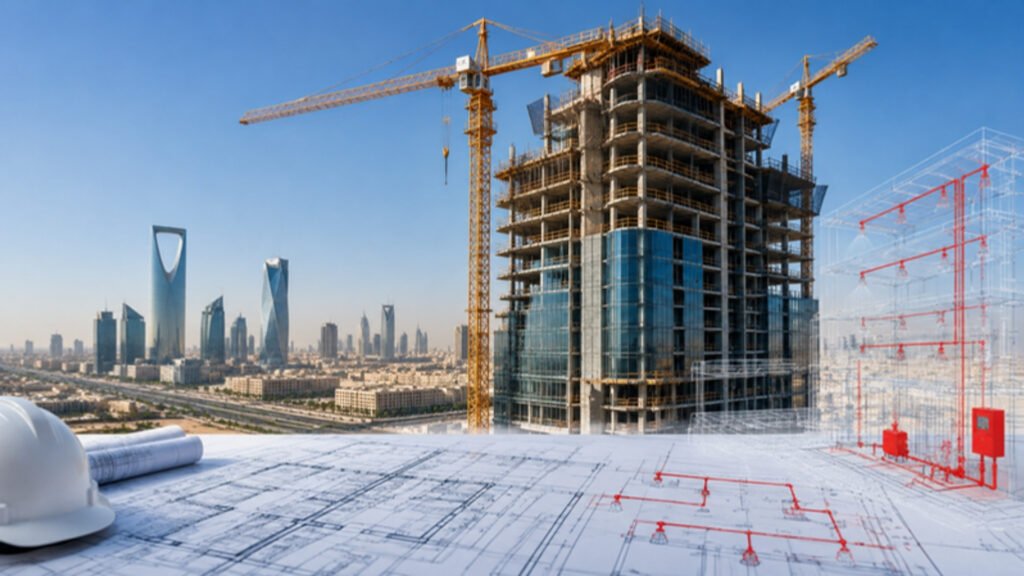
The Saudi Standards, Metrology and Quality Organization (SASO) has published a circular on the SABER platform, addressed to all SABER users, that requires the supplier’s name and CR number (commercial registration) to appear on the product itself for products covered by ten technical regulations, from 1 October 2026. The supplier is the Saudi importer or the local manufacturer.
The fire control materials and equipment regulation is not on the list, but several covered products end up in buildings, including cement-based building materials, electric lifts and solar PV systems. This item sets out what the circular says and what it means for contractors, suppliers and building owners.
Key takeaways
- From 1 October 2026, the supplier’s name and CR number must appear on the product; the supplier is the importer or local manufacturer.
- The circular relies on Article 11 of the Product Safety Law and Article 19 of its Executive Regulations.
- It covers ten technical regulations, including building materials such as cement (Part 3), electric lifts for buildings and facilities, and small solar PV systems.
- SASO will check compliance against the data uploaded to SABER.
- Fire-fighting equipment is not covered, but keeping product labels consistent with SABER records is good practice for every product.
What the SABER circular says about the supplier’s name and CR number
The circular asks SABER users to show the supplier’s name and CR number on the product, as set out in the labelling section of each covered technical regulation. Its legal basis is Article 11 of the Product Safety Law, issued by Royal Decree No. M/36, and Article 19 of the law’s Executive Regulations, approved by the SASO Board on 15 November 2024.
The circular sets 1 October 2026 as the start date. It states that SASO will verify compliance using the data on SABER, and that violators face the measures and penalties in the Product Safety Law and its Executive Regulations.
| # | Technical regulation covered (as named in the circular) |
|---|---|
| 1 | Technical Regulation for Tanks – Part 2: LPG Tankers |
| 2 | Technical Regulation for Watercrafts |
| 3 | Technical Regulation for Tanks |
| 4 | Technical Regulation for Trailers and Semi-Trailers |
| 5 | Technical Regulation for Electrical Self-Balancing Boards (Scooter) |
| 6 | Technical Regulation for Simple Pressure Vessels |
| 7 | Technical Regulation for Child Restraint Systems and Strollers |
| 8 | Technical Regulation for Building Materials – Part 3: Hydraulic Links and Related Products (cement, lime, ready-mix concrete and similar) |
| 9 | Technical Regulation for Solar Photovoltaic Systems (small systems, per the Arabic title) |
| 10 | Technical Regulation for Electrical Lifts used in Buildings and Facilities |
What it means for contractors and suppliers
On the product, not the carton
The circular says the details must appear on the product. Inspection and verification firm HQTS recommends durable marking on the product itself rather than relying on packaging or documents, since packaging is discarded at installation.
The local supplier is accountable
The name required is that of the Saudi importer or local manufacturer, not the overseas factory. Importers therefore need the factory to add their details at production, and those details must match the product file registered on SABER.
Building materials, lifts and solar systems on projects
Items 8, 9 and 10 matter directly to building contractors. According to its published text, the Building Materials Part 3 regulation covers cement, lime, gypsum, ready-mix concrete, mortar and cement blocks, while electric lifts and small PV systems are supplied on residential and commercial projects, and units arriving after the start date without the required details may run into conformity problems. Contractors should ask suppliers to confirm the label before shipment.
What about fire-fighting equipment?
The circular does not mention the technical regulation for fire control materials and equipment. That equipment remains subject to its own regulation, including the conformity certificate for extinguishing equipment and fire pumps through SABER, as our news item on SABER conformity for fire-fighting equipment explains.
The circular still shows a clear direction: SASO compares what is on the product with what is in its SABER file. Fire equipment suppliers should check three things: the model number on the product matches the datasheet and the SABER file, supplier details on the label are clear, and the technical file is complete. Our guide to fire equipment technical documents covers the paperwork in detail.
FAQ
Does the circular cover fire extinguishers and suppression equipment?
The fire control materials and equipment regulation is not among the ten regulations named. Watch SABER for later circulars; the labelling requirements in each product’s own regulation still apply.
Is a label on the packaging enough?
The circular requires the details on the product. Durable marking on the product itself is the safer choice, because packaging does not stay with the product after installation.
Who counts as the supplier?
The importer in Saudi Arabia or the local manufacturer, with its name and CR number, not the foreign factory.
Conclusion
The new SABER circular is narrow in scope, covering ten technical regulations, but it makes the product label part of digital verification. Contractors supplying cement-based materials, lifts or PV systems need to confirm labels before shipment, and fire equipment suppliers benefit from checking that each product matches its SABER file.
Importing fire equipment for a project? We can help you check datasheets, conformity certificates and product details before shipment, as part of our technical supply service. Talk to the AZEIDK team

