AZEIDK Solutions
Integrated Engineering Solutions for Safer Facilities
Fire protection, low current systems, and electromechanical solutions.
Fire Protection & Life Safety
Fire Alarm SystemsAddressable and conventional detection and alarm→Fire Fighting SystemsSprinkler networks, fire pumps and components→Special Fire Suppression SystemsGas and aerosol systems for sensitive equipment→Kitchen Fire Suppression SystemsHood and cooking equipment protection→Smoke Extraction & Emergency VentilationSmoke control to keep escape routes usable→Fire-Rated Doors & Emergency ExitsFire-rated doors and exit hardware→Electromechanical & Contracting
HVAC, Electrical & Plumbing WorksElectromechanical (MEP) works coordinated with fire protection and low current systems→Smart Buildings & Systems IntegrationNetworks, CCTV, access control, fire alarm and BMS working as one→General ContractingProject delivery and trade coordination, with life safety built in from day one→Engineering delivery process
Regulatory & compliance support

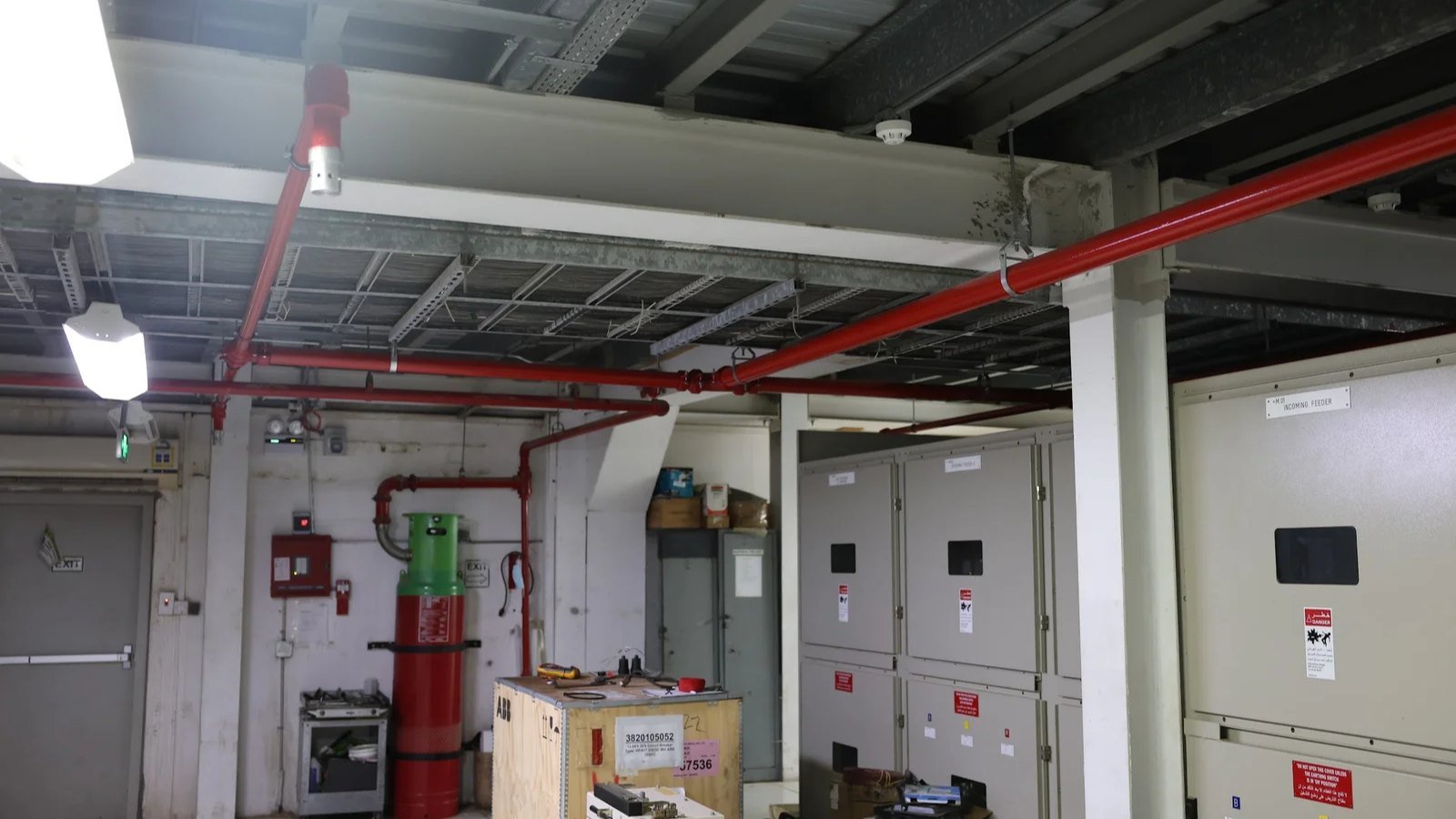
Fire Alarm Systems
Addressable and conventional fire alarm systems, designed, installed and tested by AZEIDK
Explore Fire Alarm Systems →
Need the right engineering solution?
Talk to the AZEIDK Team →